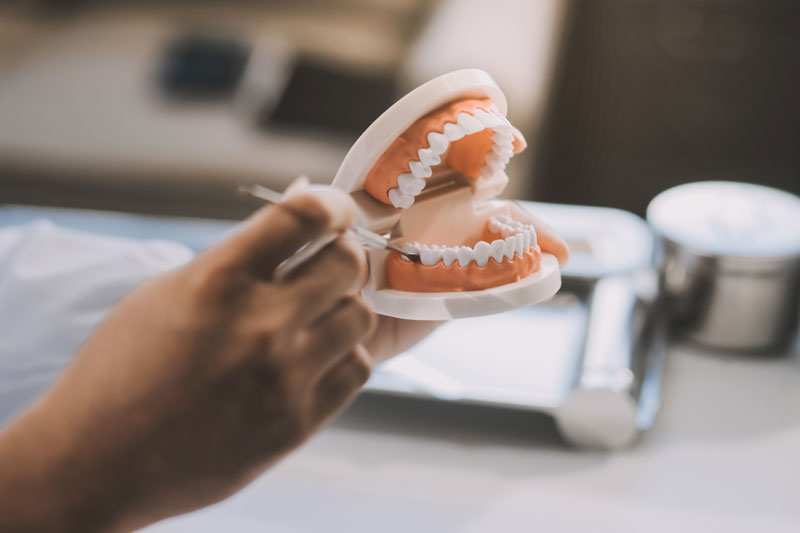



A complete tooth implant has three parts that work together: a titanium post that replaces the tooth root, an abutment that connects the post to the new tooth, and a custom restoration, such as a crown, bridge, or denture, that you see and chew with. Unlike dentures or a dental bridge alone, a complete implant replaces both the root and the visible tooth, which is why it can feel and function so much like the original.
When it comes to restoring your smile in Charlotte, NC, complete dental implants are planned around those three components. At Charlotte Dental Arts, Dr. Edwin Porter handles each one in-house, from digital planning and placement to the final restoration. This guide explains what each part does, the different ways implants can be restored, and what to look for in an implant provider.
Anatomy of a Dental Implant: Key Components Explained
Cleveland Clinic’s overview of dental implant types and parts describes the same three-part structure. Knowing what each piece does makes it easier to understand treatment plans, costs, and long-term care.
The Implant Post
The post is typically made from titanium because bone bonds to it readily. After placement, the surrounding bone grows onto its surface over several months. Once fully integrated, the post is designed to stay in place for the long term, and it is the part that helps preserve the jawbone after tooth loss.
The Abutment
The abutment is the link between the hidden post and the visible tooth. It can be a stock part or custom-made for your gum shape, and its angle and height affect how natural the finished tooth looks at the gumline. Our dedicated article on implant abutments covers the options in more depth.
The Crown or Restoration
The dental crowns and other restorations on top of implants are usually made from high-strength ceramic and are designed to match the color and shape of surrounding teeth. Restorations can be cemented onto the abutment or secured with a small screw, which makes future maintenance or replacement easier. This is the only part that typically wears over time and may eventually need replacement.
Restoration Types for Complete Tooth Implants
The same basic implant can support several kinds of restorations. The right one depends on how many teeth are missing and how much bone is available.
You can learn more about full-arch options on our All-on-4 dental implants and implant-supported dentures pages, and in our posts on All-on-X candidacy and when mini dental implants are the better choice.
Beyond Aesthetics: Functional and Health Benefits of Implants
Because a complete implant replaces the root, it provides chewing stability that removable options cannot match and helps limit the bone loss that follows tooth extraction. The seamless look of a well-made implant crown also restores confidence in social settings. For a full comparison of these benefits against bridges and dentures, see our post on the perks of dental implants for complete teeth replacement.
The Implant Procedure: A Step-by-Step Breakdown in Charlotte, NC
The implant procedure typically involves several stages. It begins with detailed planning through 3D imaging and examination, followed by surgical placement of the post under local anesthesia, with sedation available for comfort. A healing phase of several months allows the bone to fuse with the implant. Once healed, the abutment is attached, followed by the custom restoration matched to your surrounding teeth.
For a stage-by-stage walkthrough, including what recovery feels like, read our guide to understanding the dental implant procedure. The planning step is covered in detail in how digital implant planning ensures precise placement.
Aftercare and Long-Term Success: Maintaining Your Implant
After placement, mild discomfort, swelling, and minor bruising are common and usually subside within a few days. Applying an ice pack intermittently during the first 24 hours can help reduce swelling, and over-the-counter pain relievers and rest are typically enough for most patients.
Long term, each component needs protection. Brush with a soft-bristled toothbrush and non-abrasive toothpaste, clean around the implant daily, and keep regular dental visits so the tissue around the post stays healthy. Our post on long-term dental implant care explains the routine in detail.
Choosing the Right Dental Implant Provider in Charlotte, NC
Choosing the right implant provider significantly influences your experience and results. These are the questions worth asking at any consultation:
- Training and credentials: Ask about implant-specific education, such as residency training or credentials from the International Congress of Oral Implantologists.
- Who places and who restores: Find out whether one office handles surgery and the final restoration, or whether you will be referred between practices.
- Planning technology: 3D imaging and digital planning help place implants in the right position for the final tooth.
- Restoration options: A provider who offers single crowns through full-arch solutions can recommend what fits rather than what is available.
- Maintenance support: Ask how implants are monitored after treatment and how often you will be seen.
At Charlotte Dental Arts, implant placement and restoration happen under one roof. Our post on why many dentists refer out for implants explains the difference that makes, and our implant candidacy page covers who is typically a good fit. If implants are part of a broader plan, our smile makeover process guide explains how they are sequenced with cosmetic treatment.
Start With a Consultation
Dr. Porter is a Diplomate in Implantology with the International Congress of Oral Implantologists, completed an implant dentistry residency at Georgia Regents University, and has been named a Top Dentist in Charlotte by Charlotte Magazine for over 20 years. He brings more than 25 years of implant experience to every case.
Are you ready to restore your smile with complete tooth implants? Get in contact with our doctor, Dr. Edwin Porter, DDS, FAGD, and our team at our office by Charlotte, NC to schedule your consultation today.
Frequently Asked Questions About Complete Tooth Implants
What are the three parts of a dental implant?
A complete dental implant has a titanium post that replaces the tooth root, an abutment that connects the post to the new tooth, and a restoration such as a crown, bridge, or denture. The post fuses with the jawbone, the abutment passes through the gum, and the restoration is the part you see and chew with.
Does the implant crown ever need to be replaced?
The implant post is designed to stay in place for the long term, but the crown on top can wear or chip over time, much like any dental restoration. Because the crown attaches to the abutment, it can usually be replaced without disturbing the implant post itself.
Is a screw-retained or cement-retained implant crown better?
Both are used successfully. A screw-retained crown can be removed by the dentist for cleaning or repair, while a cement-retained crown can sometimes offer a slightly different look in certain positions. The choice depends on the location of the implant, the angle of the post, and your restorative needs.
How many implants are needed to replace a full arch of teeth?
Many full-arch restorations are supported by four implants, as with All-on-4, while some cases use five, six, or more depending on bone volume and bite forces. A removable implant-supported denture may use as few as two to four implants. Imaging during your consultation determines the right number.
Are dental implants made of metal?
Most implant posts are made of titanium, a metal that bone bonds to well. The abutment may be titanium or a tooth-colored material, and the visible crown is usually high-strength ceramic, so no metal is seen when you smile.
About the Author
Dr. Edwin Porter, DDS, DICOI, FAGD
Dr. Edwin Porter has been named a Top Dentist in Charlotte by Charlotte Magazine for over 20 years, as voted on by his peers, and brings more than 25 years of experience in cosmetic, restorative, and implant dentistry to Charlotte Dental Arts. He is a Diplomate in Implantology with the International Congress of Oral Implantologists (DICOI), a Fellow of the Academy of General Dentistry (FAGD), and Visiting Faculty at CEREC Doctors, and he completed an implant dentistry residency at Georgia Regents University. He handles implant planning, placement, and restoration in-house, from single-tooth crowns to full-arch restorations.