



A dental implant that hurts, feels loose, or never looks right can shake your confidence in a procedure you expected to be permanent. It is a frustrating position to be in, especially after already investing time, money, and hope into restoring your smile.
At Charlotte Dental Arts, we treat patients who come to us after an implant placed elsewhere has failed or is showing early warning signs of trouble. Dr. Edwin Porter has more than 25 years of experience in implant dentistry and has completed over 6,000 same-day CEREC restoration cases, giving him the clinical background to evaluate what went wrong and map out a path forward.
What Causes A Dental Implant To Fail?
Implant failure usually falls into one of two categories: early failure, which happens before the implant fully heals, or late failure, which can occur months or years after placement. Early failure is often tied to poor osseointegration, meaning the implant post never properly fused with the jawbone. This can happen due to insufficient bone density, an infection at the surgical site, or excessive pressure placed on the implant before it had time to stabilize.
Late failure tends to develop more gradually. Peri-implantitis, an infection of the gum and bone tissue surrounding the implant, is one of the most common culprits. Left unaddressed, this infection can erode the supporting bone and eventually cause the implant to loosen or shift. Smoking, uncontrolled diabetes, and grinding your teeth at night can all raise your risk of these complications as well.
Signs Your Implant May Be Failing
Catching a problem early often means more treatment options and a better long-term outcome. Some patients notice the signs right away, while others experience symptoms so gradually that they assume it is normal. Reviewing the most common warning signs can help you know when to schedule an evaluation.
Signs that an implant may be struggling include the following:
- Looseness: Any movement or shifting of the implant or its crown, which typically means the fusion with the bone has weakened.
- Persistent pain: Discomfort that continues well past the initial healing period rather than fading over time.
- Gum recession or swelling: Red, puffy, or receding gum tissue around the implant site, which can point to an active infection.
- Difficulty chewing: A bite that feels off or uneven pressure when eating on the affected side.
- Visible bone loss: Changes seen on X-rays that indicate the surrounding bone is deteriorating.
If you notice any of these changes, reaching out for a professional evaluation sooner rather than later gives us more room to intervene before the situation worsens.
How We Evaluate A Failed Or Failing Implant
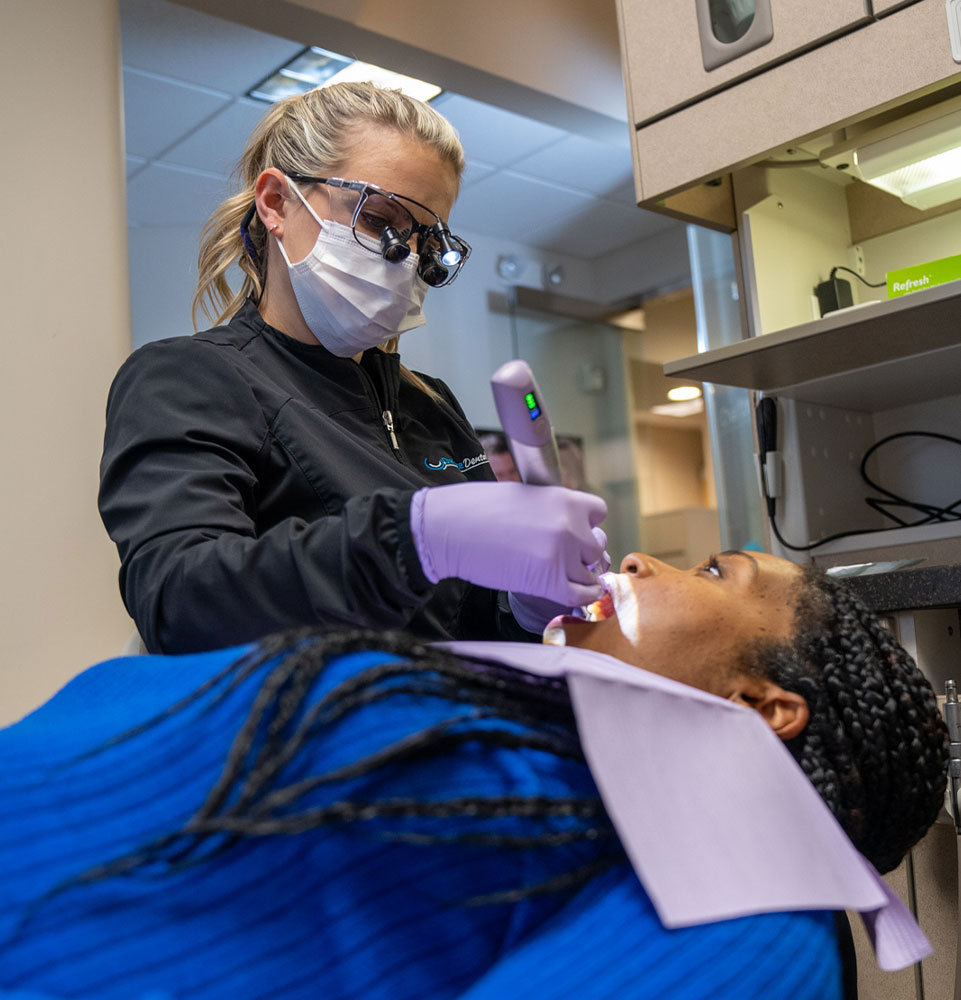
Every failed implant case starts with a thorough diagnostic workup. We use advanced imaging to assess the surrounding bone structure, gum health, and the position of the implant itself. This allows Dr. Porter to identify the underlying cause, whether that is an infection, insufficient bone support, improper angulation, or another factor, rather than simply addressing the surface-level symptom.
Because Dr. Porter is a Diplomate of the International Congress of Oral Implantologists and a Fellow of the Academy of General Dentistry, he brings an implant-focused perspective to cases that general dentistry offices may not be equipped to fully diagnose. This matters because the right fix depends entirely on the right diagnosis. Removing and replacing an implant without understanding why the first one failed can set patients up for the same outcome twice.
Research on implants placed into sites of previous failure backs up why this evaluation step matters so much. According to a retrospective study following implant reimplantation, survival rates were significantly lower for implants placed into sites of previous failure compared to first-time implants, which reinforces the importance of correcting the underlying issue before moving forward with a replacement.
Your Treatment Options Moving Forward
Once we understand why your implant failed, we can walk you through a treatment plan built around your specific situation. In many cases, the first step is removing the failed implant and allowing the site to heal fully before any further treatment begins. If bone loss has occurred, bone grafting may be needed to rebuild a stable foundation before a new implant can be placed.
If infection is present, we address that directly, since placing a new implant into an infected site tends to produce the same disappointing result.
Once the area is healthy and the bone has properly regenerated, we can reassess your candidacy for a new implant and discuss whether a traditional implant or an alternative approach, such as All-on-4, makes more sense for your goals. Every recommendation is based on your imaging, your health history, and what gives you the best chance at a lasting result.

Why Patients Trust Us With Complex Implant Cases
Patients dealing with a failed implant often feel hesitant about starting over, and that hesitation is understandable. We take extra time during these consultations to walk through exactly what happened, what your options look like, and what to expect at each stage of retreatment. You deserve a clear explanation, not just a quick fix.
Our office has been recognized as a Charlotte Magazine Top Dentist for more than 20 years, and Dr. Porter continues to complete over 100 hours of continuing education annually through programs like the Pankey Institute, Dawson Academy, and Spear Education. We also work with patients who are out-of-network with their insurance, and financing options through CareCredit, Cherry, and our in-house Premier Dental Savings Program can help make retreatment more manageable.
Meet Our Team
Dr. Edwin Porter brings exceptional dental expertise with specialized training in cosmetic procedures to the Waxhaw community. Serving the community as your cosmetic dentist near Waxhaw, NC, we offer comprehensive aesthetic solutions ranging from professional teeth whitening and cosmetic bonding to porcelain veneers and complete smile makeovers. Our cosmetic dentistry philosophy focuses on enhancing your natural beauty while addressing the specific concerns that have kept you from loving your smile.
With years of experience in aesthetic dentistry, Dr. Porter understands the dramatic impact a beautiful smile can have on your personal and professional life. We take a conservative, patient-centered approach to cosmetic treatments, always recommending the least invasive options that will achieve your desired results. Your satisfaction is our success, and we’re dedicated to delivering cosmetic dentistry that combines artistry, precision, and lasting quality.
Get Your Failed Implant Evaluated At Charlotte Dental Arts
Dealing with a failed dental implant does not mean you are out of options. With the right diagnosis and an experienced eye on your case, most patients can still achieve the stable, comfortable smile they were originally hoping for. Dr. Porter’s background in advanced implant training means you get a thorough evaluation instead of guesswork.
If you are experiencing pain, looseness, or any other signs that your implant is not healing the way it should, do not wait for the problem to get worse. Contact our office today to schedule an evaluation with Dr. Edwin Porter and take the next step toward a smile that lasts.
Transform Your Smile Today!
I understand the information disclosed in this form may be subject to re-disclosure and may no longer be protected by HIPAA privacy regulations and the HITECH Act.