



Losing one tooth or several can leave you wondering how a dentist can possibly know, before any surgery even begins, exactly where an implant will sit safely and securely in your jaw. The uncertainty is understandable. Traditional implant placement relied heavily on a dentist’s trained eye and hand, with far less insight into what was happening beneath the gum line until the procedure was already underway.
At Charlotte Dental Arts, we approach implant treatment differently. Digital implant planning allows Dr. Edwin Porter to map your bone structure, nerve pathways, and ideal implant positions before a single incision is made, giving you a clearer picture of your treatment and a more predictable outcome from the very first consultation.
What Is Digital Implant Planning?
Digital implant planning is a technology-driven process that allows us to design your implant treatment on a computer before any surgery takes place. Rather than estimating implant position during the procedure itself, we use detailed imaging and specialized software to plan every angle, depth, and placement point in advance.
This process begins with cone beam computed tomography, commonly known as CBCT, a type of 3D scan that captures a highly detailed view of your jawbone, sinuses, nerve pathways, and surrounding tissue. We combine this scan with digital impressions and photographs of your mouth to build a complete picture of your oral anatomy. That information is then loaded into planning software, where Dr. Porter can view your case from every angle and test different implant positions before deciding on the one that will serve you best.
Why Does Bone Density and Structure Matter for Implants?
Every patient’s jawbone is different, and bone density plays a direct role in whether an implant will hold steady over time. Digital imaging allows us to assess bone quality and volume with a level of detail that a visual exam alone cannot provide.
This evaluation helps us determine whether procedures like bone grafting are needed before implant placement. If your bone density is insufficient in certain areas, we can identify that early and build a treatment plan that strengthens the foundation first, rather than discovering the issue mid-procedure.
Nerve pathways and sinus cavities also show up clearly on a CBCT scan. Knowing exactly where these structures sit allows us to avoid them entirely during placement, which reduces the risk of complications and supports a smoother recovery.
How Does Digital Planning Improve Implant Accuracy?
Digital planning software gives us the ability to virtually place implants in multiple positions before committing to one. We can compare angles, depths, and spacing side by side, weighing both the long-term stability of the implant and how the final restoration will look and function.
Research on computer-guided implant placement supports what we see clinically. A study comparing conventional freehand implant placement against computer-fabricated 3D guide-aided placement found that guided techniques help clinicians achieve consistent, predictable positioning across a range of cases. This kind of precision matters most in complex cases, such as when multiple implants are being placed close together or near sensitive anatomical structures.
Once your plan is finalized, we use it to fabricate a custom surgical guide. This guide fits precisely over your teeth or gums during surgery, directing the placement of each implant exactly as planned. The result is a procedure that tends to move faster, with less guesswork and fewer surprises once treatment begins.
What Does the Digital Implant Planning Process Involve?
Your digital implant planning experience starts with a comprehensive evaluation of your oral health and treatment goals. We combine your CBCT scan with digital impressions and photographs of your smile to build a full picture of your case.
From there, Dr. Porter analyzes the imaging and uses planning software to map out implant spacing, emergence angles, and the design of your final restoration. A few factors we weigh during this stage include the following:
- Bone density and volume at each proposed implant site
- Proximity to nerves, sinuses, and other anatomical structures
- The angle and depth needed for long-term stability
- How the final crown or restoration will fit with your bite and smile
Once we settle on the optimal configuration, that plan becomes the blueprint for your surgical guide and, ultimately, for your surgery itself.

Who Can Benefit From Digital Implant Planning?
Most patients considering dental implants can benefit from this level of planning, but it becomes especially valuable in more involved cases. If you’re missing several teeth, have lower bone density, or are considering a full mouth reconstruction, digital planning gives us a much clearer roadmap before treatment begins.
Patients pursuing All-on-4 dental implants also rely heavily on this technology. Because All-on-4 treatment involves placing a full arch of teeth on just four strategically positioned implants, precise planning is essential to distributing bite force evenly and avoiding the need for additional bone grafting in many cases.
Meet Our Team
Dr. Edwin Porter brings exceptional dental expertise with specialized training in cosmetic procedures to the Waxhaw community. Serving the community as your cosmetic dentist near Waxhaw, NC, we offer comprehensive aesthetic solutions ranging from professional teeth whitening and cosmetic bonding to porcelain veneers and complete smile makeovers. Our cosmetic dentistry philosophy focuses on enhancing your natural beauty while addressing the specific concerns that have kept you from loving your smile.
With years of experience in aesthetic dentistry, Dr. Porter understands the dramatic impact a beautiful smile can have on your personal and professional life. We take a conservative, patient-centered approach to cosmetic treatments, always recommending the least invasive options that will achieve your desired results. Your satisfaction is our success, and we’re dedicated to delivering cosmetic dentistry that combines artistry, precision, and lasting quality.
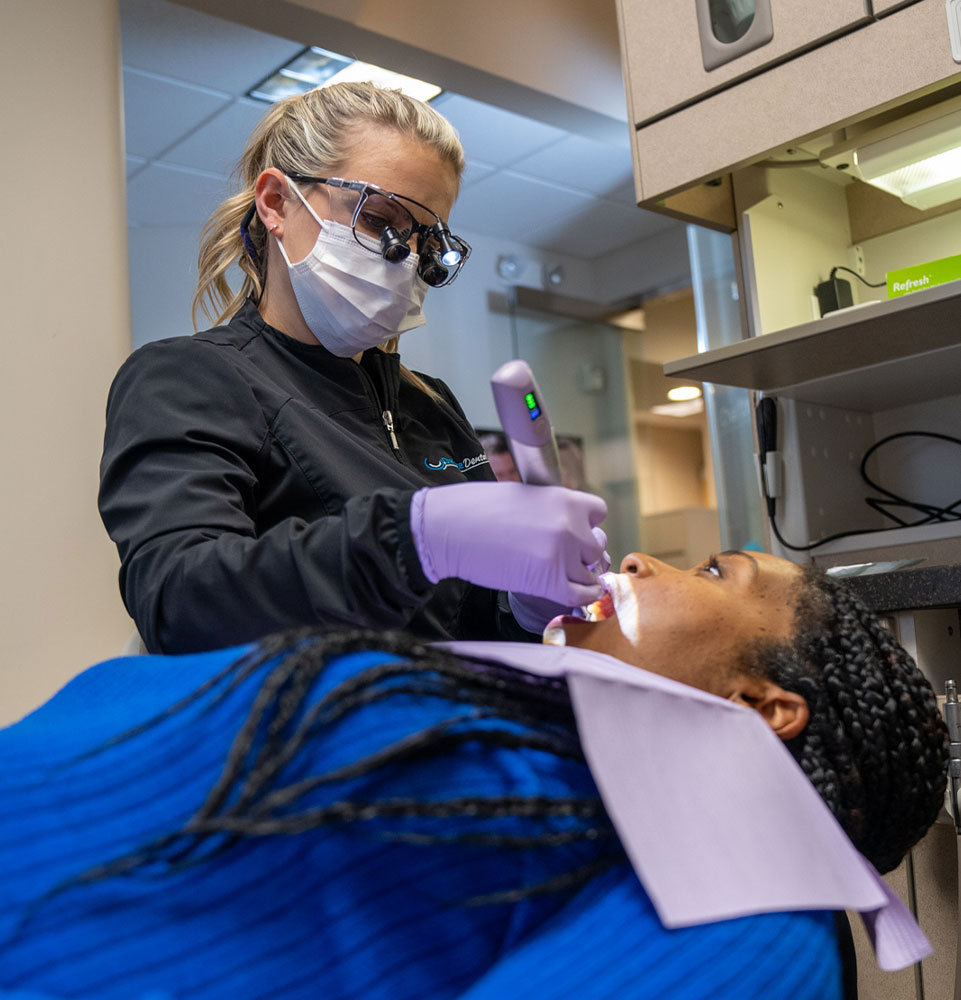
Schedule Your Digital Implant Planning Consultation With Charlotte Dental Arts
Understanding exactly how your implant treatment will unfold before it begins can make the entire process feel far less intimidating. With digital implant planning, you get a treatment plan built around your specific anatomy, not a one-size-fits-all approach, giving you confidence in both the process and the outcome.
If you’re ready to see what digital implant planning could mean for your smile, our team at Charlotte Dental Arts is here to walk you through every step. Reach out to contact our office today to schedule your consultation and find out if you’re a candidate for this advanced approach to implant treatment.
Transform Your Smile Today!
I understand the information disclosed in this form may be subject to re-disclosure and may no longer be protected by HIPAA privacy regulations and the HITECH Act.