


Medically Reviewed by Dr. Edwin Porter, DDS, DICOI, FAGD on August 14, 2026
Mini dental implants offer an effective tooth replacement solution when standard implants aren’t ideal for your situation. These smaller-diameter posts work particularly well for patients with limited jawbone density, those seeking a less invasive procedure, or anyone looking for a faster, more affordable path to a restored smile. Understanding when mini implants make sense helps you choose the right option for your unique needs.
At Charlotte Dental Arts, Dr. Edwin Porter brings over 20 years of dental implant experience as a Diplomate of the International Congress of Oral Implantologists. His digital dentistry expertise and advanced implant techniques ensure you receive personalized guidance on whether mini implants align with your oral health goals.
Understanding Mini Dental Implant Design
Mini dental implants measure less than 3 millimeters in diameter, roughly half the width of traditional implants. Their smaller size doesn’t compromise strength for appropriate applications.
Structural Differences
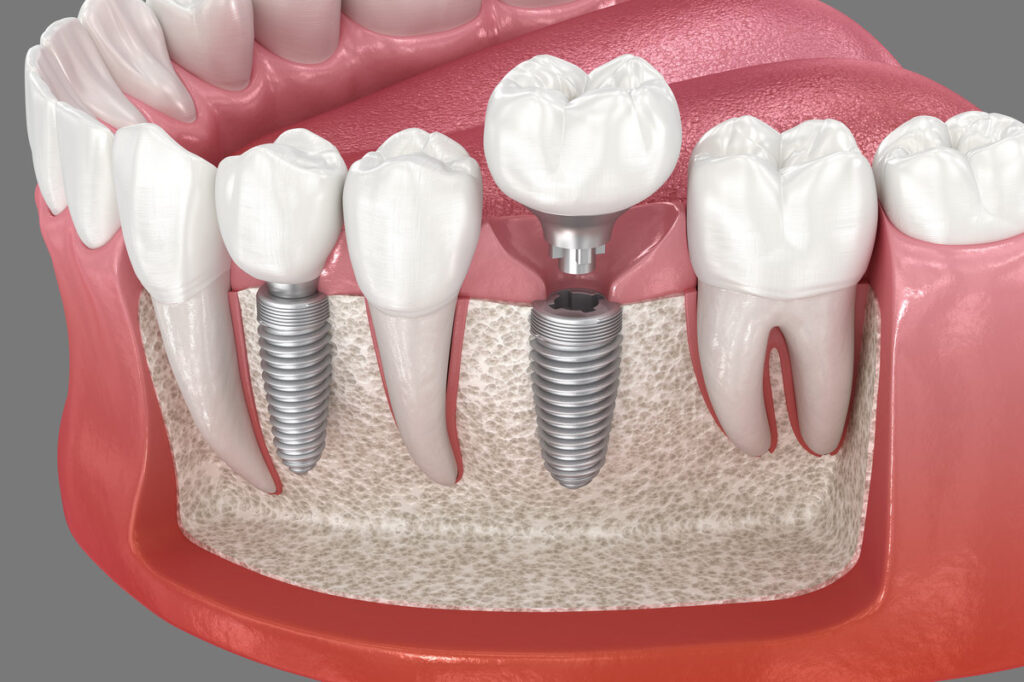
The posts feature a ball-shaped top that snaps directly into prosthetic attachments, eliminating the need for separate abutment components. This streamlined design simplifies both placement and restoration processes. The reduced diameter means mini implants require less bone volume for successful placement.
Clinical Applications
Patients with naturally thinner ridges or mild bone loss often qualify for mini implants without needing bone grafting procedures. The simplified structure also allows dentists to place multiple mini implants in areas where a single standard implant would fit, potentially improving stability for certain restorations.
Best Uses for Mini Implants
Mini implants excel in specific clinical situations. Denture stabilization represents their most common use. Four to six mini implants placed in the lower jaw can transform loose, uncomfortable dentures into secure, functional prosthetics. The immediate improvement in eating ability and confidence makes this application particularly valuable for denture wearers. Single tooth replacement in smaller spaces works well with mini implants. Lower incisors and similar narrow teeth benefit from the proportional size. The less invasive placement means faster healing and quicker return to normal activities.
When Mini Implants Become the Better Choice
Several scenarios make mini implants preferable to standard options.
Limited Bone Volume
Patients with bone loss who want to avoid grafting procedures find mini implants accessible.
Medical Considerations
The reduced surgical trauma and shorter healing period lower overall treatment risks.
Budget Constraints
A simplified procedure requires less chair time and often fewer follow-up appointments.
Age Factors
Older patients seeking improved denture stability without extensive surgery benefit most.
- Limited bone volume: Patients with bone loss who want to avoid grafting procedures find mini implants accessible. The smaller footprint requires less existing bone structure while still providing adequate support for appropriate restorations.
- Medical considerations: People with conditions affecting healing or those taking medications that impact bone integration may benefit from the less invasive mini-implant approach. The reduced surgical trauma and shorter healing period lower overall treatment risks.
- Budget constraints: Mini implants typically cost less than traditional implants. The simplified procedure requires less chair time and often involves fewer follow-up appointments, making comprehensive tooth replacement more accessible.
- Age factors: Older patients seeking improved denture stability without extensive surgery appreciate the mini-implant option. The procedure’s simplicity and quick recovery align well with the needs of senior patients.
The right choice depends on your specific situation. Jawbone density, intended restoration type, budget considerations, and overall health all factor into the decision.
Comparing Mini and Traditional Implants
Traditional implants offer superior strength for heavy chewing forces and complex restorations. Their larger diameter provides more surface area for bone integration, creating extremely stable foundations for crowns and bridges. The two-stage placement process allows for optimal healing before restoration attachment. Mini implants prioritize simplicity and accessibility over maximum strength. The single-stage placement means immediate prosthetic attachment in many cases. While they handle moderate chewing forces well, mini implants work best for lighter-duty applications like denture retention or replacing smaller teeth. Studies show dental implants maintain a success rate of 95%, making both traditional and mini implants reliable options when properly selected for the appropriate clinical situation.
The Mini Implant Placement Process
Mini implant placement typically takes one appointment. The dentist numbs the treatment area and uses a small pilot drill to create guide holes.
Surgical Procedure
The implants screw directly into position through these prepared sites. Many patients experience minimal discomfort and can return to regular activities within days. Immediate loading allows same-day prosthetic attachment in many cases.
Recovery Timeline
Denture wearers often leave the office with newly stabilized prosthetics that function immediately. This quick transformation eliminates the waiting period associated with traditional implant healing phases. Follow-up appointments monitor healing and ensure proper integration.
Choose Charlotte Dental Arts for Your Mini Dental Implant Consultation
Determining whether mini dental implants suit your needs requires professional evaluation. Dr. Porter’s extensive training through institutions like the Pankey Institute and Dawson Academy, combined with his DICOI credentials and recognition as a Charlotte Magazine Top Dentist for over 20 years, ensures you receive guidance tailored to your situation. His digital dentistry capabilities, including thousands of CEREC cases completed, bring precision to every aspect of implant planning and placement.
The team at Charlotte Dental Arts provides comprehensive assessments using advanced diagnostic technology. We evaluate bone structure, discuss your restoration goals, and explain all available options clearly. Our focus on patient education helps you make informed decisions about your dental care. Whether you’re considering All-on-4 dental implants or single tooth replacement, we offer solutions tailored to your needs. Complete our online contact form to schedule your mini dental implant consultation today.
Frequently Asked Questions About Mini Dental Implants
How long do mini dental implants last?
With good oral hygiene and regular dental visits, mini implants can last many years, though their smaller size means they are generally recommended for lighter-duty applications rather than the heaviest chewing forces. Your dentist can advise on expected longevity based on where the implants are placed and how they are used.
Are mini dental implants less expensive than traditional implants?
Mini implants generally cost less than traditional implants because the procedure requires less chair time, often skips bone grafting, and typically needs fewer follow-up appointments. Exact pricing depends on how many implants are placed and the type of restoration being supported.
Can mini implants be used to replace a full set of teeth?
Mini implants are most commonly used to stabilize a full lower denture, with four to six implants placed to secure the prosthetic. For full-arch replacement with a fixed, non-removable result, traditional implants such as All-on-4 are typically the more appropriate solution.
Is recovery faster with mini dental implants?
Yes. Because mini implants require a smaller surgical site and often allow same-day loading, most patients return to normal activities within a few days, compared to the longer staged healing process common with traditional implants.
How do I know if I am a candidate for mini implants instead of standard implants?
Candidacy depends on bone density, the location and number of teeth being replaced, and your restoration goals. A clinical evaluation with imaging is the only reliable way to determine whether mini implants or traditional implants are the better fit for your case.
About the Author
Dr. Edwin Porter, DDS, DICOI, FAGD
Charlotte Dental Arts
Dr. Edwin Porter is a Diplomate of the International Congress of Oral Implantologists and has been recognized as a Top Dentist in Charlotte for over 20 years, placing and restoring dental implants entirely in-house for patients throughout the Charlotte, NC area.