

Medically Reviewed by Dr. Edwin Porter, DDS, DICOI, FAGD on August 24, 2026
Sedation dentistry is beneficial because it allows patients with dental anxiety, a strong gag reflex, sensory sensitivities, or lengthy treatment needs to receive the care they need without the fear, discomfort, or memory of the appointment that would otherwise keep them away. Dental anxiety has no limitations, and it can affect patients of all ages. Thanks to major advancements in sedation dentistry, patients who suffer from dental anxiety now have real options for relief, and they can experience the dental care they need without the anxiety they do not want.
At Charlotte Dental Arts, we have watched sedation change what is possible for patients who once avoided the dentist for years at a time. Below, we cover which patients benefit most, how each sedation option works, and what you can expect from a comfortable, low-stress visit.
Which Patients Benefit From Sedation Dentistry?
The patients who tend to benefit most from sedation dentistry include those with the following:
- Dental anxiety: a fear or dread of dental visits that makes routine care hard to complete
- Sensitive teeth: heightened sensitivity that makes even minor treatment uncomfortable
- Low pain tolerance: a lower threshold for discomfort during dental work
- Claustrophobia: discomfort with having hands, instruments, or a dental dam near the face
- Sensitive gag reflex: a strong reflex that makes impressions, X-rays, or longer procedures difficult
- Previous dental trauma: a difficult past experience that has made new visits stressful
- Fidgety behavior: difficulty sitting still for the length of a procedure, common in children and some adults
Sedation also benefits patients who need several procedures completed in a single visit, such as a full mouth restoration, since it allows the dentist to work efficiently while keeping the patient relaxed for a longer appointment.
How Sedation Dentistry Works
Not every patient needs the same level of sedation. We match the option to the procedure, the patient’s anxiety level, and their medical history.
Nitrous Oxide
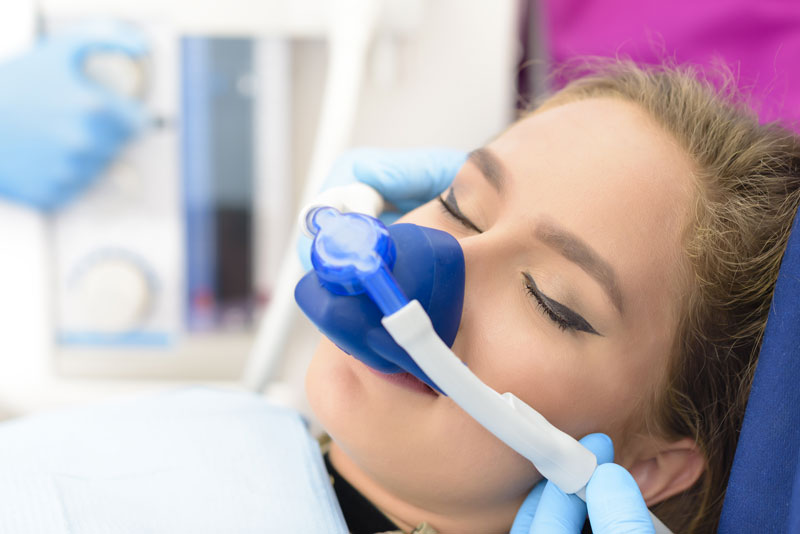
Nitrous oxide, commonly known as laughing gas, is inhaled through a small nose mask. It takes effect within a minute or two, wears off quickly once the mask is removed, and is well suited to mild to moderate anxiety during shorter procedures.
Oral Conscious Sedation
With oral conscious sedation, the patient takes a prescribed medication before the appointment to reduce anxiety and promote relaxation. The patient stays conscious and can respond to the dental team, though they typically feel drowsy and need a driver to and from the office.
IV Sedation
IV sedation is administered directly into the bloodstream and provides the deepest level of conscious sedation available in a dental office setting. It takes effect almost immediately and can be adjusted throughout the appointment, which makes it a good fit for longer or more complex procedures such as dental implants.
According to the Cleveland Clinic, sedation dentistry can range from minimal sedation, where you stay awake but relaxed, to deep sedation, where you are on the edge of consciousness. Your dentist recommends a level based on the procedure and your anxiety level.
The Benefits of Sedation Dentistry
The major benefit of undergoing sedation during a dental procedure, such as dental implants and cosmetic dentistry, is avoiding the pain and anxiety that would otherwise come with the procedure. Sedation also gives your dentist more time to be precise with the work being done, which supports a positive outcome and a smoother recovery.
Beyond comfort, sedation dentistry offers a few practical advantages worth noting:
Fewer Appointments
Because sedation keeps you relaxed for longer stretches, we can often combine several procedures into one visit instead of spreading them across multiple appointments.
Reduced Physical Strain
Staying still and keeping your mouth open for an extended period can strain your jaw and neck. Sedation reduces that physical toll, particularly for longer restorative or surgical work.
A More Positive Association With Dental Care
Patients who have a comfortable experience with sedation are more likely to keep up with preventive visits going forward, rather than delaying care out of fear.
Is Sedation Dentistry Safe?
Sedation dentistry has an established safety record when it is administered by a trained provider who reviews your medical history, current medications, and any prior sedation experiences beforehand. Monitoring during the appointment allows the dental team to adjust the sedation level as needed. For a deeper look at how safety protocols apply to both adults and children, see our guide on whether IV sedation dentistry is safe.
What to Expect During a Sedated Appointment
Every sedation option comes with its own preparation steps, from fasting guidelines for IV sedation to arranging a ride home after oral conscious sedation. We walk every patient through what to expect before the day of treatment so there are no surprises. Our full breakdown of what to expect if you opt for sedation during your dental procedure covers the before, during, and after of each option in more detail.
Finding the Right Sedation Option for You
Children, adults, and patients with special needs can all be candidates for sedation dentistry, but the right approach looks different for each. Families exploring options for a child with dental anxiety can read more in our guide to family-friendly sedation options for dental anxiety. Adults who have avoided treatment for years often benefit from the approach outlined in how a board-certified sedation dentist approaches anxiety differently, and patients weighing whether sedation is the right call at all can start with whether sedation dentistry can relieve dental anxiety.
Schedule Your Appointment
If you suffer from dental anxiety, or if you fall into any of the categories above, sedation dentistry can help you get the care you need in comfort. Our doctor, Dr. Edwin Porter, is board-certified in oral sedation and will discuss our sedation options with you to find the best fit for your needs. Please feel free to contact our office in Charlotte, NC to schedule your appointment.
Frequently Asked Questions About Sedation Dentistry
What is sedation dentistry?
Sedation dentistry uses medication to help patients relax during a dental procedure. Options range from nitrous oxide, which is inhaled and wears off quickly, to oral conscious sedation taken by mouth, to IV sedation, which is administered directly into the bloodstream for a deeper level of relaxation.
Am I a candidate for sedation dentistry?
Most patients are candidates for at least one form of sedation dentistry, including those with dental anxiety, a sensitive gag reflex, low pain tolerance, claustrophobia, previous dental trauma, or difficulty sitting still for a procedure. Your dentist reviews your medical history and current medications before recommending a specific option.
Is sedation dentistry safe?
Sedation dentistry is considered safe when administered by a trained provider who screens your health history beforehand and monitors you throughout the appointment. Every sedation level, from nitrous oxide to IV sedation, is adjusted to the individual patient rather than applied the same way for everyone.
What are the different types of dental sedation?
The three most common types are nitrous oxide, which is inhaled and provides light, fast-acting relaxation; oral conscious sedation, taken by mouth before the appointment for moderate anxiety; and IV sedation, given directly into the bloodstream for the deepest level of relaxation used in a dental office.
Will I remember my dental procedure after sedation?
Memory of the procedure depends on the sedation level used. Nitrous oxide typically allows full awareness and memory, while oral conscious sedation and IV sedation often produce partial or complete memory loss of the appointment itself, which many anxious patients consider an added benefit.
About the Author
Dr. Edwin Porter, DDS, DICOI, FAGD
Charlotte Dental Arts
Dr. Edwin Porter has received Charlotte Magazine’s “Top Dentist in Charlotte” award for more than 20 years, as voted on by his peers. He has completed advanced training in oral sedation and is board-certified in its safe administration, alongside advanced training at the Pankey Institute, Spear Education, and the Dawson Academy.