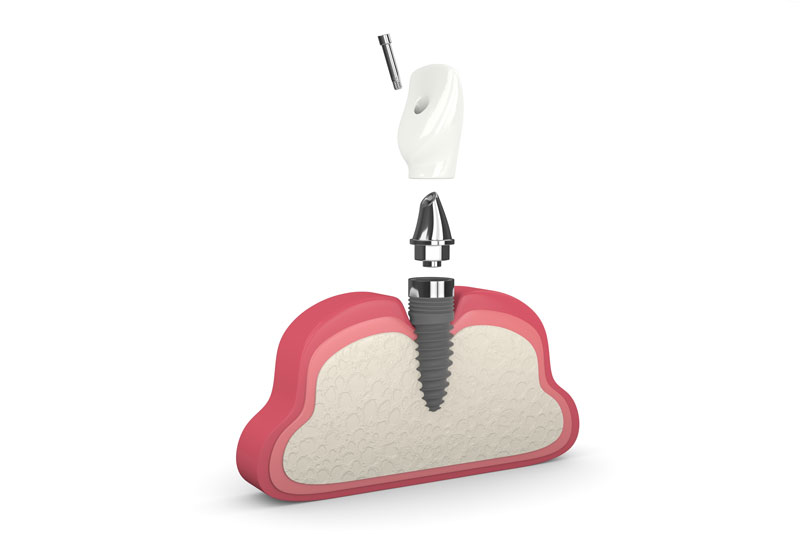



Dental implants restore missing or severely damaged teeth by replacing the tooth root with a small titanium post, then topping it with a custom crown, bridge, or denture, giving patients back the ability to chew, speak, and smile without the limitations that come with removable prosthetics. Unlike a bridge or partial denture, an implant replaces the entire tooth structure, root included, which is what allows it to preserve the jawbone and function like a natural tooth over the long term.
At Charlotte Dental Arts, dental implants are placed and restored entirely in-house, so you are not referred to a separate surgical office partway through treatment. Below, we walk through the specific benefits implants offer over other tooth-replacement options, how candidacy is determined, and what the process looks like from consultation to final restoration.
Implants Preserve Your Jawbone
When a tooth is lost, the jawbone beneath it starts to lose density because it no longer receives the stimulation that comes from chewing. This process, known as bone resorption, continues gradually and can change the shape of the jaw and face over time. According to the FDA, one of the primary benefits of dental implant systems is that they help keep the jawbone from shrinking due to bone loss, since the titanium post replaces the root and continues to stimulate the surrounding bone in a way that removable dentures and bridges cannot.
Implants Do Not Require Reducing Healthy Teeth
A traditional bridge replaces a missing tooth by anchoring it to crowns placed on the two neighboring teeth, which means those teeth must be reshaped and reduced even if they were previously healthy. An implant is self-supporting. It stands on its own in the jawbone, so no adjacent teeth need to be altered to hold it in place. This preserves more of your natural tooth structure over your lifetime and reduces the number of teeth that could eventually need restorative work.
Implants Restore Full Chewing Function and Natural Speech
Because the implant post fuses directly with the jawbone through a process called osseointegration, the finished restoration functions much closer to a natural tooth than a removable option. Patients can bite and chew a full range of foods without the shifting or slipping that removable dentures sometimes cause, and many patients also notice clearer speech once a gap or ill-fitting appliance is no longer affecting how air and the tongue interact with the palate.
Am I a Candidate for Dental Implants?
Most healthy adults who are missing one or more teeth are candidates for implants. The key requirements are adequate jawbone volume to anchor the post, healthy gum tissue free of active infection, and overall health that supports normal healing. Patients who have lost bone density following tooth loss or extraction are not automatically ruled out, since a bone graft can often rebuild the volume needed before implant placement. Conditions like gum disease or untreated decay typically need to be addressed first so the implant has a healthy foundation to integrate with. Visit our dental implant candidacy page for a more detailed breakdown of what we evaluate at your consultation.
How the Implant Process Works
Treatment generally follows three phases. First, the titanium implant post is placed into the jawbone under local anesthesia or sedation. Second, a healing period of roughly three to six months allows the bone to fuse to the implant. Third, once healing is confirmed, a custom crown, bridge, or denture is attached on top using an abutment connector. For a single tooth, the final restoration can often be completed same-day using our in-office CEREC crown technology once healing is complete, so you are not waiting on an outside lab for that final step.
What Implants Cost and How to Budget for Treatment
Implant cost varies based on how many teeth are being replaced, whether a bone graft is needed first, and the type of final restoration selected. Our dental implant cost page breaks down the factors that typically affect pricing. We accept most PPO insurance plans and offer financing options through third-party lenders, and our team can walk through your specific coverage and payment plan during your consultation before any treatment begins.
Dental implants remain one of the most requested restorative options at our practice because they solve problems that removable appliances cannot, particularly jawbone preservation and long-term stability. If missing or failing teeth have been holding you back from eating and smiling the way you want, schedule a consultation to find out whether implants are the right fit for your situation.
Frequently Asked Questions About Dental Implants
How long do dental implants last?
The titanium implant post can last a lifetime once it has fully fused with the jawbone, since the material does not decay the way natural teeth can. The crown attached on top may need replacement after fifteen to twenty years depending on wear, but the underlying implant typically remains stable with routine brushing, flossing, and regular dental visits.
Are dental implants painful?
Placement is done under local anesthesia or sedation, so patients typically feel pressure rather than pain during the procedure itself. Mild soreness or swelling for a few days afterward is common and can usually be managed with over-the-counter pain relievers, similar to recovery from a tooth extraction.
Can I get a dental implant if I have bone loss?
In many cases, yes. If imaging shows insufficient jawbone volume, a bone graft can rebuild the area before implant placement. This adds time to the overall treatment timeline but does not usually rule out implants as an option, since bone grafting is a well-established and routine preparatory step.
How many implants are needed to replace a full arch of teeth?
A full arch of missing teeth can often be restored with as few as four implants supporting a fixed or removable full-arch prosthesis, rather than one implant per missing tooth. The exact number depends on jawbone density and the type of restoration planned, which is evaluated individually at your consultation.
What is the recovery time after implant surgery?
Initial soft-tissue healing generally takes about a week, though the full process of the bone fusing to the implant, called osseointegration, can take three to six months before the final restoration is placed. Most patients return to normal activities within a few days of the surgical appointment.