


Medically Reviewed by Dr. Edwin Porter, DDS, DICOI, FAGD on August 25, 2026
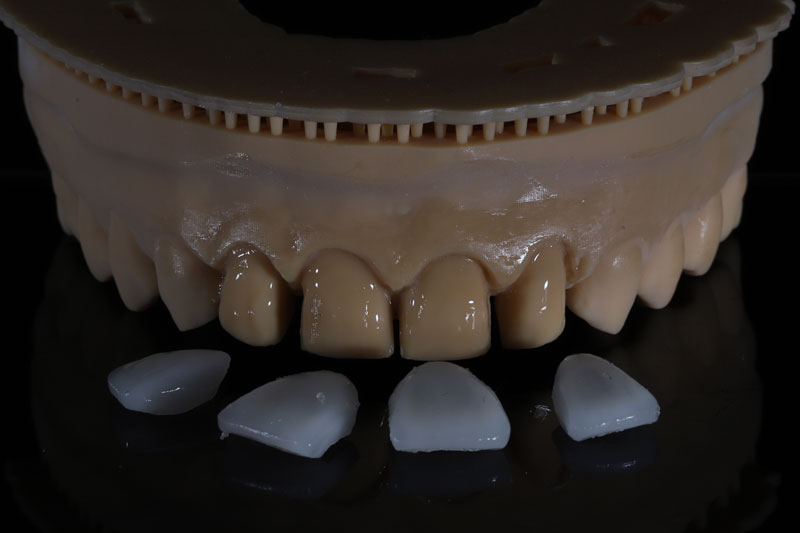
Porcelain veneers are thin, custom-shaped shells bonded to the front of the teeth to change their color, shape, and surface texture without altering the teeth underneath. They are designed to correct cosmetic concerns such as staining, chips, gaps, and minor misalignment while leaving the biting surface of the tooth intact.
At Charlotte Dental Arts, Dr. Edwin Porter works with patients throughout the Charlotte area, including Unionville, NC, to plan veneer treatment around each person’s smile goals and dental history. For residents of Unionville and the surrounding Union County communities, that means a nearby practice offering the same porcelain veneer techniques found at larger cosmetic dentistry centers, without the drive into downtown Charlotte.
What Are Porcelain Veneers?
Porcelain veneers are ultra-thin shells of dental-grade ceramic, typically between 0.3 and 0.7 millimeters thick, that are bonded to the visible front surface of a tooth. The material is chosen because it reflects light in a way that closely resembles natural tooth enamel, which is why veneers can look convincing even up close.
Because each veneer is fabricated from a mold or digital scan of the patient’s teeth, the final shape, shade, and length can be customized rather than mass-produced. Veneers differ from dental crowns, which cover the entire tooth, and from bonding, which uses a moldable resin applied directly to the tooth. Crowns and veneers solve different problems, and a side-by-side comparison of crowns and veneers can help clarify which restoration fits a particular concern.
What Dental Concerns Can Porcelain Veneers Address?
Veneers are a cosmetic treatment, which means they are designed to change the appearance of otherwise healthy teeth rather than treat active disease or a functional bite problem. Patients typically consider veneers when one or more front teeth show a cosmetic flaw that whitening or bonding cannot fully correct.
Common concerns that porcelain veneers can potentially improve include the following.
- Discoloration or staining: Deep stains from medication, injury, or genetics that do not respond to professional whitening.
- Chips, gaps, or uneven edges: Minor chips, small gaps between teeth, or edges that appear worn or uneven.
- Misshapen or crowded teeth: Teeth that look too small, too narrow, slightly rotated, or mildly crowded within the smile line.
Veneers are typically placed on the teeth that show when a patient smiles, and a full evaluation determines how many teeth need treatment to create a balanced result.
Who Is a Good Candidate for Porcelain Veneers?
A good candidate for porcelain veneers generally has healthy teeth and gums, with no untreated cavities or active gum disease. Because a small amount of enamel is typically removed to make room for the veneer, the tooth underneath needs to be structurally sound before treatment begins.
Patients who grind their teeth heavily, have significant bite misalignment, or have widespread decay may need those issues addressed first, or may be better suited to a different restoration such as a crown. During a consultation, Dr. Porter reviews dental history, evaluates gum health, and discusses the patient’s goals before recommending porcelain veneers or an alternative treatment path.
The Porcelain Veneers Process in Charlotte, NC
Getting porcelain veneers involves a planned sequence of visits rather than a single appointment. Treatment typically begins with a consultation, where Dr. Porter evaluates dental health and discusses the patient’s goals for the finished smile. This conversation shapes a treatment plan tailored to the specific teeth involved.
The next phase involves preparing the teeth by removing a thin layer of enamel to create room for the veneer. Impressions or digital scans are then taken to build a precise model of the teeth, which a dental laboratory uses to fabricate the veneers. Once the veneers return from the lab, they are checked for fit and shade before being permanently bonded to the teeth with a dental adhesive. Most patients complete the process in two to three visits.
Porcelain Veneers vs. Composite Veneers
Porcelain and composite veneers both cover the front of the tooth, but they differ in material and how long they typically last. Porcelain veneers are fabricated in a dental laboratory from ceramic material, which gives them a translucent quality similar to natural enamel and strong resistance to staining over time.
Composite veneers are built up directly on the tooth from a tooth-colored resin, often in a single visit. That makes composite veneers faster to place and generally less expensive, but the material is more prone to staining and chipping and typically needs to be replaced sooner than porcelain. Patients who are deciding between the two options, or between veneers and Lumineers, a specific brand of ultra-thin veneer, should discuss durability, appearance, and budget with their dentist before committing to either material.
Are Porcelain Veneers Permanent, and What Do They Cost?
Porcelain veneers are considered a long-term cosmetic treatment, not a temporary one. According to the Cleveland Clinic’s overview of dental veneers, the procedure is not reversible because a portion of the natural enamel is removed to fit the veneer, and enamel does not grow back once it is gone. Cleveland Clinic notes that porcelain veneers generally need replacing every 10 to 20 years, which is a helpful benchmark when weighing the investment.
Cost varies based on the number of teeth treated, the complexity of the case, and the laboratory used to fabricate the veneers, with per-tooth pricing commonly falling in the range charted on our porcelain veneers treatment page. Financing options and out-of-network insurance guidance are available for patients who want to spread the cost of treatment over time rather than pay in full upfront.
Caring for Your New Porcelain Veneers
Porcelain veneers do not require special products, but a few habits help them last as long as possible. Dr. Porter recommends brushing twice daily with a non-abrasive toothpaste and flossing daily to protect both the veneers and the gum tissue around them. Biting into ice, using teeth as tools to open packaging, or chewing on hard objects can chip or dislodge a veneer, so these habits are worth avoiding.
Routine dental checkups remain important after veneer placement, since they allow Dr. Porter to check the margins where the veneer meets the natural tooth and catch any early wear before it becomes a larger problem. With consistent care, patients can potentially enjoy their veneers for many years without complications.
Why Unionville, NC Patients Choose Charlotte Dental Arts for Porcelain Veneers
Patients in Unionville and nearby communities such as Weddington and Marvin often want cosmetic dentistry that does not require a long drive into central Charlotte. Cosmetic dentistry patients from the Weddington area and greater Union County frequently choose Charlotte Dental Arts for the same reason: convenient access to a practice that plans treatment around the patient’s full smile rather than a single tooth.
Some patients considering veneers are also weighing a broader set of cosmetic changes, and our team can walk through how veneers fit alongside other smile makeover treatment options during a single consultation. Dr. Porter and the team at Charlotte Dental Arts handle the consultation, preparation, and bonding appointments in-house, so patients are not shuttled between multiple offices for one treatment plan.
Dr. Edwin Porter, DDS, DICOI, FAGD, has built the porcelain veneers program at Charlotte Dental Arts around detailed planning, from the initial consultation through the final bonding appointment, so that each set of veneers is shaped and shaded for the individual patient rather than a standard template.
If you are in Unionville, NC and want to find out whether porcelain veneers can potentially address your smile concerns, our team can walk you through candidacy, process, and cost during a consultation. Contact Charlotte Dental Arts to schedule a porcelain veneers consultation.
Frequently Asked Questions About Porcelain Veneers
How long do porcelain veneers last?
Porcelain veneers generally last between 10 and 20 years with proper care, though the exact lifespan depends on oral hygiene habits, bite forces, and how well the patient avoids biting hard objects. Regular dental checkups help catch early wear before a veneer needs replacement.
Are porcelain veneers reversible?
No, porcelain veneers are not reversible. A thin layer of enamel is typically removed from the front of the tooth to make room for the veneer, and since enamel does not regenerate, the tooth will generally need some form of covering going forward.
Does getting porcelain veneers hurt?
Most patients report mild sensitivity rather than significant pain during enamel preparation, since local anesthesia can be used for comfort. Some temporary sensitivity to hot or cold is common in the days after bonding and typically fades on its own.
Can porcelain veneers fix crooked or crowded teeth?
Veneers can potentially mask mild crowding or slight rotation by changing the visible shape and alignment of the front teeth. They are not a substitute for orthodontic treatment, so significant bite or alignment problems usually need to be addressed with braces or clear aligners first.
How much do porcelain veneers cost in the Charlotte area?
Cost depends on the number of teeth treated and the complexity of the case, since each veneer is custom fabricated in a dental laboratory. Financing options can help spread the cost across monthly payments rather than a single upfront charge.
About the Author
Dr. Edwin Porter, DDS, DICOI, FAGD
Lead Dentist, Charlotte Dental Arts
Dr. Edwin Porter is a Fellow of the Academy of General Dentistry and a Diplomate of the International Congress of Oral Implantologists, providing general, cosmetic, and implant dentistry at Charlotte Dental Arts. He works with patients throughout the greater Charlotte area, including Unionville, NC, to plan cosmetic treatments such as porcelain veneers around each patient’s oral health and smile goals.