


Medically Reviewed by Dr. Edwin Porter, DDS, DICOI, FAGD on August 21, 2026
A missing tooth does not fix itself, and the three most common ways to replace it are a dental bridge, a denture, or a dental implant. Each works differently, fits different situations, and comes with its own timeline, cost, and upkeep.
At Charlotte Dental Arts, we walk patients through all three options before recommending a path forward, because the right choice depends on how many teeth you are missing, the health of your jawbone, and what fits your budget and lifestyle. If you are exploring dental implants or another tooth replacement option, this guide breaks down how each solution works and what to weigh before you decide.
Why a Missing Tooth Should Not Be Ignored
Tooth loss is more common than many people realize. Population data from the Centers for Disease Control and Prevention shows that complete tooth loss still affects a meaningful share of older adults, and the risk climbs steadily after age 65. Even a single missing tooth carries consequences that reach beyond appearance.
When a tooth is gone, neighboring teeth can drift into the open space, gradually shifting your bite. The jawbone in that area no longer receives the pressure it needs from chewing, so the bone can begin to shrink over time, a process that may eventually change the shape of your face. Eating certain foods becomes harder, speech can be affected when front teeth are involved, and the longer a gap sits untreated, the more these effects tend to compound.
Comparing Your Options for Replacing Missing Teeth
Three well-established solutions cover most tooth replacement needs, and each has a different balance of durability, cost, and daily care.
Dental Bridges
A dental bridge fills the gap left by one or more missing teeth using a prosthetic tooth anchored by crowns on the neighboring teeth. A traditional bridge requires reshaping those adjacent teeth to fit the crowns, while an implant-supported bridge rests on implants instead of natural teeth and is often used when several teeth in a row are missing. You can review the full range of bridge options we offer to see which type fits your gap. Bridges are fixed in place, restore chewing function fairly quickly, and typically last between five and fifteen years with good oral hygiene, though the supporting teeth need extra cleaning attention to avoid decay underneath the crowns.
Dentures
Dentures replace missing teeth with a removable appliance custom-fitted to your mouth. Full dentures replace an entire arch, while partial dentures fill in gaps when some natural teeth remain. Dentures tend to be the most budget-friendly option and do not require surgery, but they can feel less stable than a fixed solution, particularly on the lower arch, and they generally need adjustment or replacement every five to eight years as the jawbone gradually changes shape from lack of stimulation. Some patients later transition to implant-supported dentures for a more secure fit.
Dental Implants
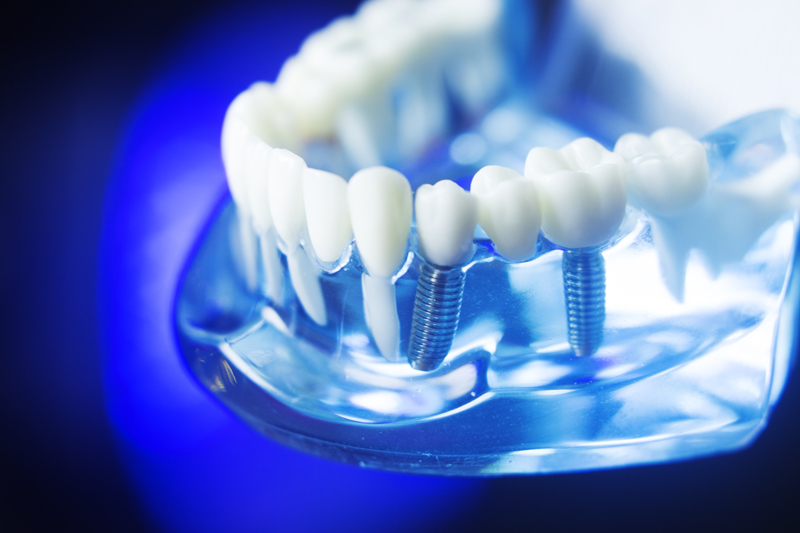
A dental implant replaces the entire tooth, root included. A titanium post is placed in the jawbone, where it fuses with the surrounding bone over several months through a process called osseointegration, and a custom crown is then attached on top. Because the implant post takes the place of the natural root, it stimulates the jawbone the same way a healthy tooth would, which helps prevent the bone loss that bridges and dentures cannot fully address. Implants also do not rely on neighboring teeth for support, so healthy adjacent teeth stay untouched. With proper care, an implant can last a lifetime, although the crown on top may need replacement after ten to fifteen years.
How to Choose the Right Replacement for Your Situation
There is no single best option for every patient, and a few key factors usually point toward the right fit.
How Many Teeth You Are Missing
A single missing tooth often has the widest range of options, from a bridge to a standalone implant. Several missing teeth in a row may point toward an implant-supported bridge, and a full arch of missing teeth typically calls for either full dentures or an implant-supported denture solution.
The Health of Your Jawbone and Gums
Dental implants require enough healthy bone to support the post, along with gums free of active disease. A candidacy evaluation can determine whether your jawbone can support an implant as is or whether additional preparation would be needed first. Bridges and dentures place fewer demands on the jawbone, which can make them a more accessible option when bone loss is significant.
Your Budget, Insurance, and Timeline
Dentures are usually the most affordable option and the fastest to complete. Bridges fall in the middle on both cost and timeline. Implants involve a higher upfront investment and a longer overall process because of the healing period, though many patients find the long-term value worthwhile given their durability. Understanding what dental implants cost in Charlotte and reviewing your insurance benefits can help you compare the real cost of each option side by side. For a full breakdown of how implants, bridges, and dentures stack up against one another, our dental implants vs. dentures vs. bridges comparison walks through the details.
How Much Daily Maintenance You Want
A fixed bridge or an implant is cared for the same way as natural teeth, with regular brushing and flossing. Dentures require daily removal for cleaning and soaking, along with periodic adjustments as your mouth changes over time. If you would rather avoid a removable appliance altogether, that preference alone can help narrow the decision.
What Happens During a Tooth Replacement Consultation
A consultation typically starts with a review of your dental and medical history, followed by an oral exam and imaging such as X-rays or a 3D scan to evaluate your jawbone and the surrounding teeth. From there, we talk through which options fit your situation, what each one costs, and how long treatment would take. You are welcome to ask questions about recovery, longevity, or how a given option might feel day to day before deciding on anything.
Caring for Your Replacement Teeth
Whichever option you choose, a few habits help it last as long as possible.
- Brush and floss daily around bridges and implants just as you would natural teeth, paying extra attention to the gum line.
- Clean removable dentures every day and soak them overnight as directed rather than leaving them in continuously.
- Keep up with regular checkups so we can catch shifting, wear, or gum changes early.
- Avoid very hard foods that can chip a crown or loosen a bridge or denture over time.
Consistent care is one of the biggest factors in how long any replacement option actually lasts.
How Charlotte Dental Arts Can Help You Restore Your Smile
Dr. Edwin Porter has more than 20 years of experience in cosmetic, restorative, and implant dentistry, and our team works with patients missing a single tooth, several teeth, or an entire arch to find the option that fits their health, budget, and goals. We walk through the tradeoffs of bridges, dentures, and implants in plain terms so you can make a decision you feel confident about, rather than guessing between options on your own.
If a missing tooth or several missing teeth have been affecting how you eat, speak, or smile, you do not have to sort through the options alone. Contact our doctor, Dr. Edwin Porter, DDS, DICOI, FAGD, and our team at our office by Charlotte, NC to schedule your consultation today.
Frequently Asked Questions About Replacing Missing Teeth
What is the best option for replacing a single missing tooth?
For a single missing tooth, a dental implant is generally the most durable choice because it replaces the root and preserves jawbone density, while a bridge is a solid option when a faster, less invasive fix is preferred. The right choice depends on your bone health, budget, and timeline, which a consultation can clarify.
How do I know if I am a candidate for dental implants?
Candidacy depends mainly on having enough healthy jawbone to support the implant post and gums free of active disease. A dental evaluation with imaging can confirm whether you qualify as is or whether additional preparation, such as bone grafting, would be needed first.
Are dentures or dental implants better for someone missing several teeth?
It depends on jawbone health, budget, and how much stability you want day to day. Implant-supported options tend to feel closer to natural teeth and place less strain on remaining teeth, while traditional dentures cost less upfront and involve a shorter, non-surgical process.
Does dental insurance cover tooth replacement options?
Many dental insurance plans cover a portion of bridges, dentures, or implants, though coverage amounts and waiting periods vary widely by plan. Checking your specific benefits before treatment, and asking our team for a pre-treatment estimate, gives you a clearer picture of your out-of-pocket cost.
How long does the entire dental implant process take?
Most implant cases take several months from start to finish because the post needs time to fuse with the jawbone before the crown is attached. Straightforward cases may finish sooner, while cases needing bone grafting or healing from an extraction first can take longer.
About the Author
Dr. Edwin Porter, DDS, DICOI, FAGD
Implant, Restorative, and Cosmetic Dentist, Charlotte Dental Arts
Dr. Edwin Porter has more than 20 years of experience in cosmetic, restorative, and implant dentistry. He is a Diplomate in Implantology from the International Congress of Oral Implantologists and a Fellow of the Academy of General Dentistry, and he has been recognized as one of Charlotte Magazine’s “Top Dentists” for more than 20 years.