


The question we hear most often from patients considering dental implants in Charlotte, NC is whether they qualify. The honest answer is that most people with missing or failing teeth are candidates, but candidacy isn’t automatic. It depends on a few specific factors Dr. Porter assesses at the consultation.
What Makes a Good Candidate
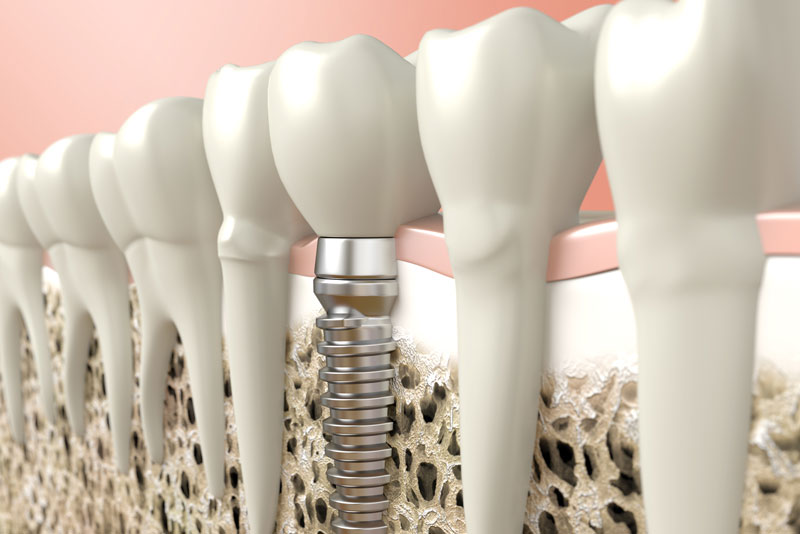
The evaluation starts with the bone. Without enough density and volume in the jaw, implant posts can’t fuse reliably during healing — so that’s what we look at first. We see patients who have been missing teeth for years and still have workable bone, and patients with more recent losses where something else has degraded it. Neither situation is assumed going in; it comes down to what the scan actually shows for that person.
Health history is the second piece. We go through it at the consultation — not as a screening gate, but to understand what’s in play. Medications that affect bone metabolism, conditions that slow healing, smoking — all of these influence how reliably osseointegration completes. Dr. Porter discusses what’s relevant and what it means for the timeline and success rate, so patients know what they’re working with before they decide anything.
When Candidacy Is Conditional
Some patients aren’t ready for placement at the first consultation but can get there with prior treatment. Active gum disease has to be resolved before we place anything — that step is non-negotiable. Bone loss severe enough that placement would be unreliable may mean a grafting procedure comes first. Patients who smoke hear about the real numbers on failure rates so they can make an informed call about what they want to do.
And sometimes the right answer isn’t a single implant at all. When a crown, bridge, or full-arch restoration is a better fit for what a patient actually needs, Dr. Porter says so. The recommendation comes from what will hold up for that patient — not from defaulting to the most involved procedure.
What the Consultation Covers
The evaluation at Charlotte Dental Arts includes a clinical exam, digital X-rays, and in most cases a CBCT scan. The 3D imaging is what lets Dr. Porter see bone volume at the specific sites where posts would go — not a general picture, but a site-by-site view of what’s actually available. He uses that to build a specific plan. Patients leave knowing whether they’re candidates, what treatment would look like for their situation, and what it would cost.
Schedule a Candidacy Evaluation
If you’re considering dental implants in Charlotte, NC, the next step is coming in for an evaluation. Dr. Edwin Porter, DDS, FAGD is a Diplomate of the International Congress of Oral Implantologists and manages the full implant process in-house — from initial imaging through final restoration, without referring out for any part of it. Contact Charlotte Dental Arts to schedule your evaluation.