


Medically Reviewed by Dr. Edwin Porter, DDS, DICOI, FAGD on August 10, 2026
Yes, your jawbone begins to change almost immediately once a tooth is missing. Without a tooth root stimulating the bone around it, that bone gradually loses density and volume in a process called resorption, and the longer the gap goes unaddressed, the more bone is typically lost.
Dental implants are considered the gold standard tooth replacement option because they are surgically placed directly into the jawbone, where they act like a natural tooth root and help preserve the bone around them. Below is what actually happens to your jawbone when a missing tooth is left unreplaced, and how implants address that process directly.
What Happens to the Jawbone When Missing Teeth Aren’t Replaced?
Bone Resorption Begins Quickly
A natural tooth root constantly transmits pressure from chewing into the surrounding bone, and that pressure is what keeps the bone dense and stimulated. Once a tooth is gone, that stimulation stops, and the bone in that area begins to resorb, or shrink. Research on this process has found that a significant portion of bone width can be lost within the first year after a tooth is extracted, with the fastest rate of loss happening in the first few months. Cleveland Clinic notes that bone loss following tooth extraction is one of the most common reasons bone grafting becomes necessary before implant placement.
Functional and Facial Changes Follow
As jawbone resorption progresses, it can lead to difficulty chewing and speaking clearly, a shift in how your remaining teeth fit together, and in more advanced cases, a sunken-in facial appearance where the lips and cheeks lose the support the jawbone once provided. Neighboring teeth can also drift into the empty space over time, which creates additional bite problems beyond the original gap.
Why Dental Implants Help Preserve Bone
Dental implants are surgically placed into the jawbone, where they function as an artificial root that transmits chewing pressure into the bone much the way a natural tooth root did. This ongoing stimulation helps maintain bone density in that area, which is one of the main reasons implants are recommended over bridges or removable dentures for long-term oral health, not just appearance.
How Are Missing Teeth Replaced With Dental Implants?
Because every smile is different, implant procedures are planned around your specific bone volume, bite, and the number of teeth being replaced. After your treatment plan is finalized during a consultation, your dentist strategically places the implant into the jawbone at a precise angle and depth determined by your imaging.
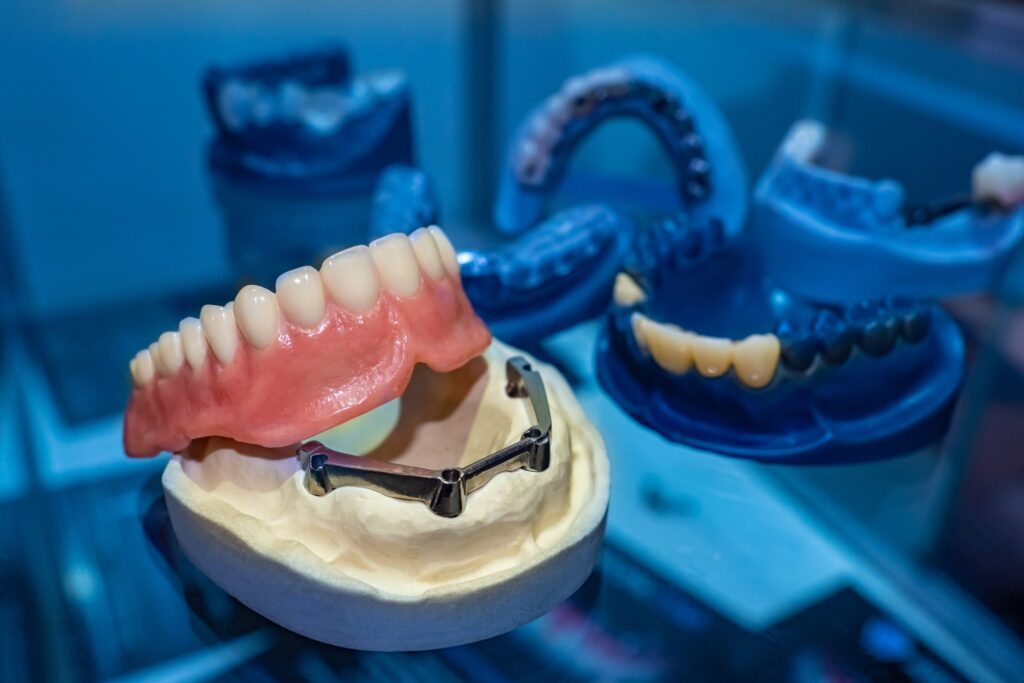
The implant then heals and fuses with the surrounding jawbone over several months, a process called osseointegration. During this healing period, a temporary crown or prosthesis is typically placed so you have a functional, natural-looking smile while you wait for the final restoration. Once healing is complete, the permanent crown, bridge, or denture is securely attached to the implant. If significant bone loss has already occurred, bone grafting may be recommended first to rebuild enough volume to support an implant. Our All-on-4 dental implants page covers how this process works for patients missing most or all of their teeth in one arch.
What If Bone Loss Has Already Occurred?
If you have been missing a tooth for months or years, some bone loss has likely already taken place, but this does not necessarily rule out implants. Bone grafting techniques can rebuild lost volume in many cases, and a consultation with imaging will show exactly how much bone remains and what, if anything, needs to be addressed before implant placement. Waiting longer generally means more bone loss and a more involved rebuilding process, which is why addressing missing teeth sooner rather than later tends to produce simpler treatment.
Replace Your Missing Teeth With Dental Implants in Charlotte, NC
Dental implants are a secure, comfortable tooth replacement option that also protects the long-term health of your jawbone. No matter how many teeth you are missing, or how long ago you lost them, Dr. Edwin Porter and our team can evaluate your bone structure and outline a treatment plan built around it.
Why wait to protect your jawbone and your smile? Schedule your consultation with our office near Charlotte, NC today.
Frequently Asked Questions About Jawbone Loss and Missing Teeth
How quickly does jawbone loss happen after losing a tooth?
Bone loss begins almost immediately and progresses fastest in the first few months after a tooth is lost. The rate slows over time, but resorption typically continues for as long as the area remains unreplaced.
Can dentures or bridges prevent jawbone loss the way implants do?
No. Bridges and removable dentures replace the visible tooth but do not transmit chewing pressure into the jawbone the way a natural root or an implant does, so bone resorption can continue underneath them even after they are placed.
How do I know if I have already lost jawbone density?
Three dimensional imaging taken during a consultation shows the current height, width, and density of your jawbone. This is the most reliable way to determine how much bone remains and whether grafting is needed before implant placement.
Is bone grafting a separate surgery from implant placement?
It depends on the amount of bone needed. Minor grafting can sometimes be done at the same time as implant placement, while more significant bone rebuilding is typically completed first and allowed to heal before the implant itself is placed.
Does jawbone loss affect more than just the area of the missing tooth?
In advanced cases, yes. Significant bone loss can change the shape of the jaw and face over time and affect the fit and stability of neighboring teeth, which is one reason addressing missing teeth sooner tends to keep treatment simpler.
About the Author
Dr. Edwin Porter, DDS, DICOI, FAGD
Founder, Charlotte Dental Arts
Dr. Edwin Porter evaluates jawbone density and plans implant treatment in-house for patients throughout the Charlotte, NC area, including cases that require bone grafting before implant placement. He holds a Diplomate credential from the International Congress of Oral Implantologists.