


When you lose a tooth, the effects do not stay contained to that one gap. The jawbone underneath begins to shrink, neighboring teeth can shift out of position, and the way you eat, speak, and feel about your smile starts to change. For people facing significant tooth loss, the two most discussed solutions are dental implants and dentures. Both can restore your smile, but they work very differently and fit different needs, timelines, and budgets. According to the National Institute of Dental and Craniofacial Research, about 17 percent of adults age 65 and older have lost all of their natural teeth, and millions more are missing at least one, which means most people will face this decision at some point.
At Charlotte Dental Arts, we guide patients through this decision every day. Led by Dr. Robert Lowe and Dr. Edwin Porter, our team takes the time to understand each patient’s oral health, lifestyle, and long-term goals before recommending a path forward. Before exploring dental implants or dentures in depth, it helps to understand the core difference: one replaces the root of the tooth, and the other replaces only the visible portion.
What Are Dental Implants
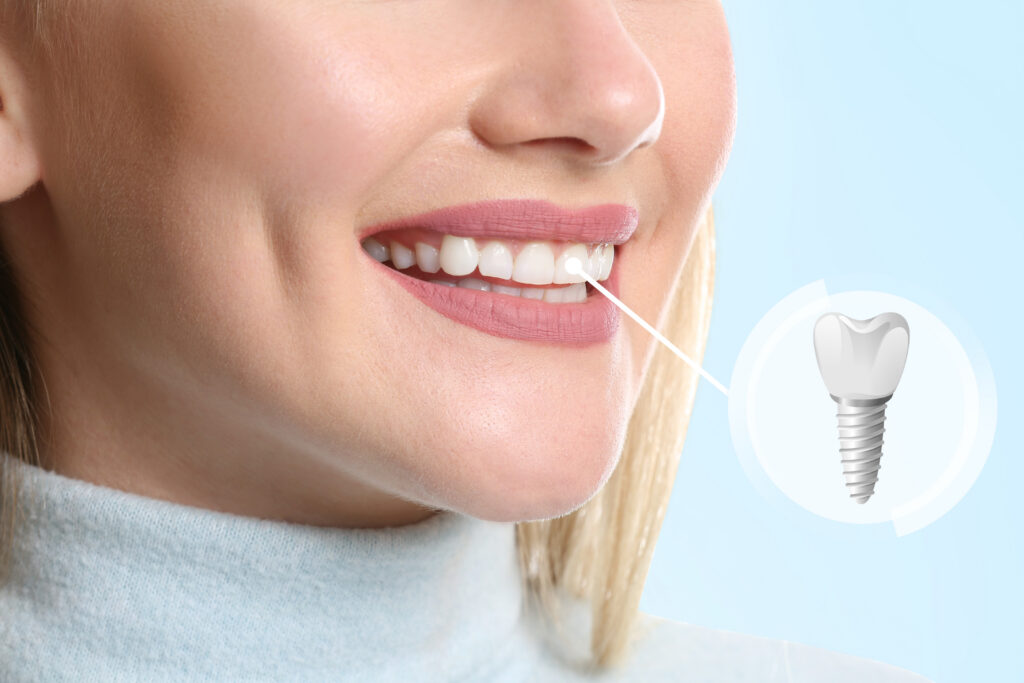
Dental implants are short titanium posts that are surgically set into the jawbone, where they ultimately fuse with the bone in a process called osseointegration. Once fully integrated, a custom crown is attached on top, creating a replacement that looks, feels, and acts like a natural one. According to a 2023 review published in the Journal of Functional Biomaterials via PubMed Central, implant therapy is considered a predictable and reliable rehabilitation method, with the global market reflecting widespread clinical confidence in the procedure.
Because implants replicate the root structure of a natural tooth, they provide stimulation to the jawbone with every bite. This prevents the bone deterioration commonly associated with tooth loss, preserving facial structure over time. Implants are a long-term investment, often lasting decades with proper care.
Who Is a Good Candidate for Implants?
Good candidates for dental implants generally have enough jawbone density to support the titanium post and are in reasonably good overall health. Patients who smoke or have uncontrolled systemic conditions may require additional evaluation before placement is recommended. For multiple teeth or a full arch, solutions like All-on-4 dental implants offer a more efficient route to a full, fixed smile.
How Dental Implant Placement Works
Implant placement happens in stages rather than a single visit. We first evaluate your bone density and overall oral health to confirm candidacy, sometimes alongside preparatory steps such as bone grafting or a tooth extraction. The titanium post is then surgically placed into the jawbone, where it needs several months to fuse with the surrounding bone through osseointegration. Once the implant has integrated, we attach an abutment and finally a custom crown shaped and shaded to match your natural teeth. From first consultation to final crown, most patients complete the process in about four to twelve months. For a closer look at each stage, see our detailed guide to the dental implant procedure.
What Are Dentures?
Full and partial dentures are removable appliances designed to replace missing teeth and the surrounding gum tissue. Full dentures replace an entire arch of teeth, while partial dentures fill in gaps when some teeth remain. They rest on the gums and, in the case of partials, may clasp onto adjacent teeth for additional support.
Dentures have a quicker path to placement than implants and do not require surgery. They are a reliable and affordable option for many patients, particularly those who may not be candidates for implant surgery due to health concerns or bone loss. Modern dentures are custom-made to fit the shape of your mouth and are crafted to look natural. That said, they do require regular maintenance, overnight removal, and periodic replacement as the shape of the jaw changes over time.
When Do Dentures Make More Sense?
Dentures are often the right choice for patients who need an immediate solution, have experienced significant bone loss, or are looking for a non-surgical path to restoring their smile. They are also a reasonable entry point for patients who may eventually transition to implant-supported options once their oral health is stabilized. In some cases, a combination approach through restorative dentistry allows patients to benefit from both options simultaneously.
How Denture Placement Works
Getting fitted for dentures starts with an impression of your gums and a review of how your upper and lower jaws align, so the finished denture supports comfortable chewing and clear speech. A preliminary set is produced first so any adjustments to fit or bite can be made before the final denture is delivered, a process that typically takes a few weeks rather than months. If you are trying to decide between a full or partial denture, our page on the differences between full and partial dentures walks through which option fits which situation.
Key Factors in Choosing Between Implants and Dentures
Beyond the basic mechanics of each option, several personal factors tend to drive the final decision. None of these should be weighed in isolation, but together they give a clearer picture of which path fits your circumstances.
Age and Overall Health
Age alone does not rule anyone in or out of either option, but overall health plays a significant role. Patients in good general health who want a long-term, low-maintenance solution often lean toward implants, since the restoration can be expected to last for decades. Older patients managing multiple health conditions, or anyone hoping to avoid a surgical procedure and its healing period, may find dentures a more practical near-term fit.
Bone Density and Jaw Health
Implants need enough bone volume in the jaw to anchor the titanium post securely. Patients who have worn dentures for many years, or who lost teeth long ago, sometimes have experienced enough bone resorption that a bone graft is recommended before implant placement. Dentures do not have this requirement, since they rest on the gum tissue rather than fusing with bone, which makes them accessible to patients regardless of how much bone remains.
Hygiene and Daily Maintenance
Implants are cared for exactly like natural teeth: brushing, flossing, and routine dental visits, with no adhesives or overnight soaking required. Dentures need a different daily routine, including nightly removal, soaking in a cleaning solution, and periodic adhesive use to keep them secure during the day. Patients who prefer to skip an extra maintenance step tend to favor implants once they understand the ongoing denture care routine.
Budget and Long-Term Cost
Dentures typically cost less upfront, which makes them appealing for patients who need an immediate, budget-friendly solution. Implants represent a larger initial investment but often cost less over a decade or two, since dentures generally need relining or full replacement every five to ten years while an implant can last a lifetime with proper care. For current pricing at our Charlotte practice, see our dental implant cost breakdown.
If you are missing one to three teeth in a row and have healthy teeth on either side of the gap, a dental bridge is another fixed option worth knowing about, though it does not preserve jawbone the way an implant does. For a full side-by-side look at cost, longevity, and candidacy across all three tooth replacement options, see our comparison of dental implants, dentures, and bridges.
Comparing the Two Options Side by Side
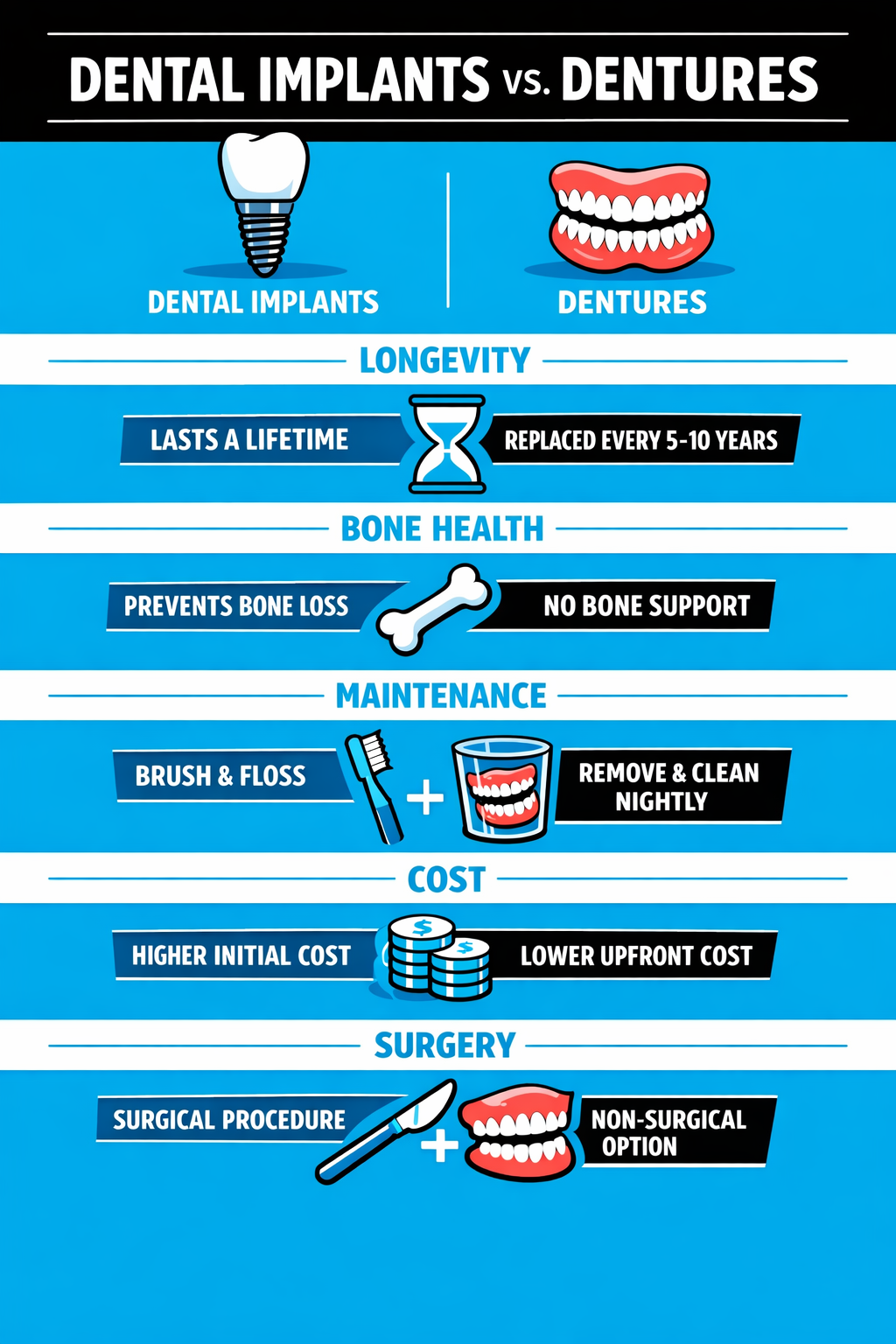
Both implants and dentures share the same purpose: replacing missing teeth and restoring function. However, they differ in meaningful ways when it comes to longevity, maintenance, bone health, and daily comfort. The following factors are worth considering as you evaluate your options:
- Longevity: Implants are made to last a lifetime with good care, while dentures typically require replacement every five to ten years.
- Bone health: Implants stimulate the jawbone and prevent deterioration; dentures do not provide this stimulation.
- Maintenance: Implants need to be cared for like natural teeth, while dentures require nightly removal and special cleaning.
- Cost: Dentures carry a lower upfront cost, while implants represent a long-term investment with reduced replacement expenses.
- Surgery: Implants require a surgical procedure and a healing period, while dentures are a non-surgical solution.
- Daily comfort: Implants function like natural teeth with no shifting or clicking, while dentures can shift while eating or speaking, especially as the fit changes over time.
No single factor should drive this decision alone. The right answer depends on your overall health, bone density, budget, and what you want your day-to-day experience to feel like.
Contact Charlotte Dental Arts to Discuss Your Options
Whether you are leaning toward implants, dentures, or are unsure where to start, the team at Charlotte Dental Arts is here to help you find the right fit. Dr. Robert Lowe and Dr. Edwin Porter bring over 20 years of combined experience in cosmetic, restorative, and implant dentistry to every consultation, and our practice is built around personalized, patient-centered care. We welcome out-of-network patients and work with patients from across the Charlotte area and surrounding communities to restore function, confidence, and long-term oral health.
We offer flexible financing options, including CareCredit, Cherry Financing, and our Premier Dental Savings Program, to help make your treatment as accessible as possible. If you are ready to take the next step toward a healthier smile, we invite you to contact our team and schedule your consultation today.
Frequently Asked Questions About Dental Implants and Dentures
What happens to my jawbone if I choose dentures instead of implants?
The jawbone continues to shrink over time because dentures rest on the gum tissue rather than transferring bite force into the bone. This gradual bone loss is why dentures often need relining or replacement every five to ten years and why some long-term denture wearers notice changes in facial support.
How much more do dental implants cost compared to dentures?
Dentures generally have a lower upfront cost than implants, but implants often cost less over ten to twenty years because they rarely need replacement. Dentures typically require relining or a new set every five to ten years, and those recurring costs add up over time.
Can implants and dentures be combined?
Yes. Implant-supported dentures use a small number of implants to anchor a removable denture in place, which reduces shifting and helps preserve some jawbone at the implant sites. This option can be a good middle ground for patients who want more stability than a traditional denture provides.
How do I know if I have enough bone density for dental implants?
Bone density is evaluated using imaging during your consultation. If bone volume is too low to support an implant safely, a bone graft can often rebuild enough structure to make implants possible later. Every patient’s bone health is different, so an in-person evaluation is the only reliable way to know.
What is recovery like after getting a dental implant?
Most patients experience mild soreness and swelling for a few days after surgical placement, managed with over-the-counter pain relief and a soft diet. The implant then needs several months to fuse with the jawbone before the final crown is attached, though daily activities can typically resume within a few days.