


Medically Reviewed by Dr. Edwin Porter, DDS, DICOI, FAGD on July 31, 2026
Dental implants can give you a permanent new smile because the implant post fuses directly with your jawbone, unlike traditional dentures, which simply rest on the gums and can shift or loosen over time. That fusion, called osseointegration, is what makes an implant function like a natural tooth root for the long term.
Traditional dentures can restore missing or damaged teeth, but they often become loose or ill-fitting as the jawbone changes shape over time. Dental implants in Charlotte, NC give patients a stable, comfortable new smile because they are anchored securely in the jawbone itself. Here is a closer look at how that permanence works and what to expect from the process.
How Dental Implants Create a Permanent Foundation
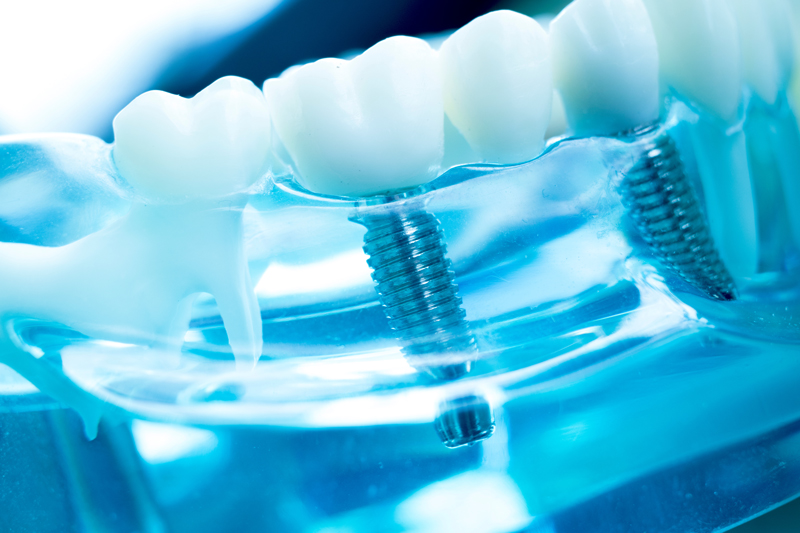
Dental implants provide patients with a permanent new smile because the implant post is designed to act like a natural tooth root. When the post is placed in the jawbone by a skilled dental professional, it stimulates the surrounding bone tissue, encouraging it to stay strong and healthy, and becomes a permanent part of the smile once it fuses with the bone through osseointegration.
Once the implant post is secured in the jawbone and the abutment is placed, a customized prosthesis, such as a crown, bridge, or denture, can be attached. Compared to unstable and unreliable traditional dentures, dental implants give patients a sturdy, long-term solution for missing teeth that also helps preserve the jawbone itself.
Dental Implants vs. Traditional Dentures
Choosing between implants and dentures often comes down to how each option performs over time. The table below outlines the key differences patients ask about most:
| Factor | Dental Implants | Traditional Dentures |
|---|---|---|
| Stability | Fused to the jawbone; does not shift | Rests on the gums; can loosen over time |
| Jawbone Health | Stimulates bone, helping prevent resorption | Does not stimulate bone; jawbone can shrink |
| Chewing Function | Functions like a natural tooth | Reduced bite force; some foods are harder to chew |
| Daily Care | Brush and floss like natural teeth | Requires removal for cleaning and adhesives |
For a deeper side-by-side look at every replacement option, our guide to dental implants, dentures, and bridges compares cost, longevity, and maintenance in more detail.
What Makes a Good Candidate for Dental Implants?
Most patients with one or more missing teeth are candidates for dental implants, provided they have adequate bone density and healthy gum tissue, or are willing to undergo bone grafting to build up the jawbone first. Good general health and a commitment to daily oral hygiene also support long-term implant success. Our dental implant candidacy guide walks through exactly what your consultation will evaluate.
The Dental Implant Process, Step by Step
Consultation and Imaging
3D CBCT imaging maps your jawbone and confirms whether grafting is needed.
Implant Placement
The titanium implant post is placed directly into the jawbone in a single appointment.
Osseointegration
Over three to six months, the post fuses with the surrounding bone.
Abutment and Final Restoration
Once healed, the abutment and custom crown, bridge, or denture are attached.
How Long Do Dental Implants Last?
97.8%
clinical success rate for implants, including grafted sites*
3–6 mo.
typical osseointegration healing period
Decades
expected lifespan with proper care
*Based on a large-scale retrospective analysis of dental implants placed with and without bone grafting, published in the National Library of Medicine.
With consistent brushing, flossing, and regular dental visits, an implant post itself is designed to last for decades, functioning as a permanent part of your smile. For more detail on what affects longevity, see our full breakdown of how long dental implants last.
Dental implants will not slip, they look and function just like natural teeth, and they allow you to smile, speak, and eat with confidence. If you are ready to restore the look and function of your smile with a permanent solution, you have come to the right place.
Get in contact with Dr. Edwin Porter, DDS, DICOI, FAGD, and our exceptional team at our office by Charlotte, NC to schedule your consultation today.
Frequently Asked Questions About Dental Implants and Permanent Smiles
Why are dental implants considered permanent while dentures are not?
Dental implants fuse directly with the jawbone through osseointegration, becoming a stable part of the bone structure. Dentures simply rest on the gums, which is why they can shift, loosen, or need periodic relining as the jawbone changes over time.
Do dental implants help preserve the jawbone?
Yes. The implant post stimulates the jawbone in a way similar to a natural tooth root, which helps maintain bone density in that area. Traditional dentures do not provide this stimulation, which can allow the jawbone to gradually reabsorb.
How long does the dental implant process take from start to finish?
Most patients complete the full process, from placement through osseointegration to final restoration, in three to six months. Cases that require bone grafting first may take somewhat longer to allow for additional healing.
Can I replace just one tooth with a dental implant?
Yes. A single dental implant with a custom crown can replace one missing tooth without altering the adjacent healthy teeth, which is different from a traditional bridge that relies on neighboring teeth for support.
What does it take to keep a dental implant healthy long term?
Daily brushing and flossing around the implant, along with regular dental checkups and cleanings, are the main factors supporting long-term implant success, similar to caring for natural teeth.
About the Author
Dr. Edwin Porter, DDS, DICOI, FAGD
Charlotte Dental Arts
Dr. Edwin Porter has been recognized as a Top Dentist in Charlotte for over 20 years. He is a Diplomate of the International Congress of Oral Implantologists (DICOI) and a Fellow of the Academy of General Dentistry (FAGD), placing and restoring dental implants entirely in-house for patients throughout the Charlotte, NC area.