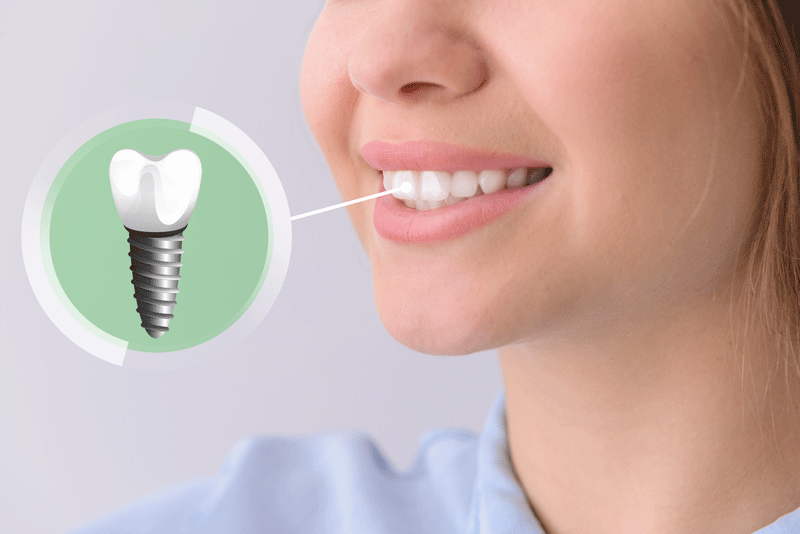



Yes. Most people who wear traditional dentures are candidates to upgrade to implant-supported dentures, provided they have enough jawbone density to support dental implants or are willing to complete a short bone grafting step first. The switch typically restores far more chewing stability and comfort than a denture that simply rests on the gums.
Traditional dentures are designed to replace missing teeth by resting on the gums and staying in place with adhesives or suction. While they restore the appearance of a full smile, they do nothing to stimulate the jawbone the way natural tooth roots once did. Over time, that missing stimulation causes the jawbone to shrink, and the denture that once fit snugly begins to slip, rock, or rub against sore spots. If you are ready to see whether you qualify, Charlotte Dental Arts can evaluate your candidacy for dental implants and walk you through every step of upgrading to a more secure smile.
Why Traditional Dentures Feel Unstable Over Time
A tooth root does more than anchor a tooth in place. Every time you bite or chew, the root transfers gentle pressure into the surrounding bone, signaling the body to keep rebuilding that bone. Once teeth are gone, that signal disappears, and the jaw begins a slow, ongoing process of bone resorption. Denture wearers usually notice the effects first as looseness, then as sore spots from a denture that no longer matches the shape of the ridge underneath it, and eventually as a sunken appearance around the mouth and lower face.
Implant-supported dentures solve this problem at its source. Because dental implants are anchored directly in the jawbone, they continue to transmit that chewing pressure the same way natural roots did, which helps preserve bone volume rather than letting it disappear.
How the Upgrade Process Works
Moving from a traditional denture to an implant-supported denture follows a predictable sequence. Every case is different, but the general path looks like this:
Am I a Good Candidate to Upgrade?
Good candidates for implant-supported dentures are generally in good general health, have healthy gums, and have either sufficient jawbone density or are willing to complete bone grafting first. The most reliable way to know where you stand is a consultation that includes a full evaluation of your dental implant candidacy, including imaging of your jawbone and a review of your medical history.
What Implant-Supported Dentures Cost in Charlotte
At Charlotte Dental Arts, implant-supported dentures cost between $9,000 and $28,000, depending on the number of implants and any preparatory treatment your case requires, with financing available starting at $118 per month. A written treatment plan with full pricing is always provided before any procedure begins, and our team can help you review financing and payment options that fit your budget.
Comparing Implant-Supported Dentures to Other Options
Implant-supported dentures are not the only implant-based solution for a full arch of missing teeth. Patients who want a fixed prosthesis that never comes out, rather than one that clips onto the implants, may be better suited to All-on-4 dental implants, which use four strategically placed implants to support a permanently fixed arch. If you are still weighing dentures, bridges, and implants against each other, our comparison of dental implants, dentures, and bridges breaks down the tradeoffs of each in more detail.
Frequently Asked Questions About Upgrading to Implant-Supported Dentures
How many dental implants does it take to support a denture?
Most implant-supported dentures use between two and six implants per arch, depending on the type of attachment system and how much support your jawbone can provide. Two to four implants are common for a removable overdenture, while a fixed, non-removable prosthesis often uses more. Your treatment plan will specify the exact number based on your imaging and bite.
Can I switch to implant-supported dentures if I already have bone loss?
In many cases, yes. If imaging shows your jawbone has lost density since your teeth were removed, a bone grafting procedure can rebuild the volume needed to place implants securely. This adds time to the overall process but does not rule out the upgrade for most patients.
Will my new denture be removable or permanently fixed?
Implant-supported dentures are typically designed to be removable, clipping securely onto the implants for daily wear and coming off for cleaning at night. Patients who prefer a denture that never comes out at all often choose a different implant-based solution, such as a fixed All-on-4 prosthesis, instead.
Does dental insurance cover the upgrade to implant-supported dentures?
Coverage varies significantly by plan, and many dental insurance policies provide only partial benefits toward implant-related treatment. Our team verifies your benefits before your first procedure and can discuss financing options for any remaining balance.
How long is the adjustment period after upgrading?
Most patients adjust to their new implant-supported denture within a few weeks. Because the denture no longer relies on suction against the gums, many people find speaking and chewing feel more natural almost immediately, with any remaining soreness resolving as the mouth adapts to the new fit.
Sources for this article include the American Dental Association’s MouthHealthy overview of dental implants and Cleveland Clinic’s guide to implant-supported dentures.