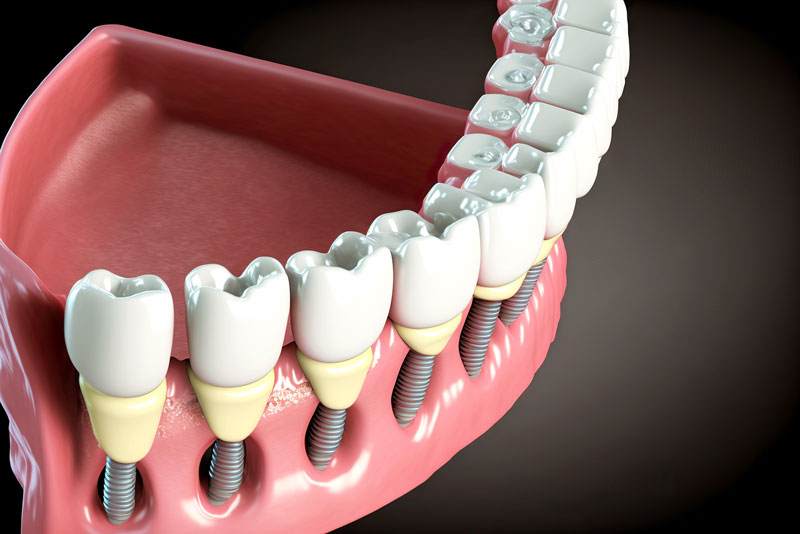



Yes, dental implants can potentially restore a smile affected by one missing tooth, several missing teeth, or an entire arch of missing teeth. Because an implant post fuses with the jawbone through a process called osseointegration, it can provide a stable foundation for a crown, bridge, or full denture designed to look and function like natural teeth.
At Charlotte Dental Arts, our team offers a full range of dental implant treatments for patients throughout the Charlotte, NC, area who want to rebuild the function and the appearance of their smile. Whether you are missing a single tooth or need a more comprehensive rebuild, our doctors design each treatment plan around your oral health needs and goals.
How Do Dental Implants Restore Your Smile?
Dental implants are considered one of the most advanced tooth replacement options available for missing teeth, and they consist of three main parts working together to rebuild a stable, natural-looking smile.
The implant post is surgically placed into the jawbone, where it is designed to act as an artificial tooth root. Over the following months, the post can fuse with the surrounding bone so it may securely support the rest of the restoration. An abutment connects the implant post to the visible prosthesis, providing structural stability while allowing the patient to bite and chew normally. The prosthesis, whether it is a single crown, a bridge, or a full denture, is custom crafted to match the shape, size, and shade of the patient’s healthy teeth.
Because the implant post replaces the tooth root itself rather than simply covering the gap left by a missing tooth, this approach can potentially restore both the look and the underlying support structure of the smile in a way that other tooth replacement options are not designed to do.
Restoring Bite Function and Speech Clarity
Missing teeth can make it more difficult to chew certain foods, and gaps can also affect the way words are formed when speaking. Dental implants are anchored directly into the jawbone, so once healing is complete, patients may be able to bite and chew with a stability that removable options cannot always match.
According to the Cleveland Clinic, dental implants are designed to let patients use them much like a natural tooth once the implant has healed, supporting more comfortable chewing and clearer speech than options that can shift or loosen over time.
Restoring Aesthetics and Facial Support
Beyond function, dental implants can also help preserve the facial structure that surrounds a missing tooth. When a tooth root is lost, the jawbone in that area can begin to lose density over time, which may contribute to a sunken or aged appearance near the missing tooth. Because an implant post replaces the root itself, it can help stimulate the surrounding bone and support the facial contours that a missing tooth would otherwise affect.
The visible portion of the restoration, whether a single crown or a full set of replacement teeth, is custom shaded and shaped to blend with the patient’s natural smile, so the goal is a result that looks and feels like it belongs.
Your Options for a Full or Partial Smile Restoration
Not every patient needs the same type of dental implant treatment, since the right approach depends on how many teeth are missing and the condition of the surrounding jawbone and gum tissue.
Single Tooth Replacement
For patients with one missing or failing tooth, a single implant post topped with a custom crown can replace both the root and the visible tooth without altering the neighboring teeth.
Multiple Teeth and Implant-Supported Bridges
When several teeth are missing in the same area, a smaller number of implant posts can be used to anchor an implant-supported bridge, reducing the number of surgical sites needed while still restoring multiple teeth at once. Patients weighing this option against traditional options can review the differences between dental implants, dentures, and bridges to better understand which route may fit their situation.
Full-Arch and Full Mouth Restoration
For patients who are missing most or all of the teeth in an arch, a set of strategically placed implants can support a fixed or removable full arch of replacement teeth. In cases involving more extensive dental damage or loss across the whole mouth, this approach may be incorporated into a broader full mouth reconstruction plan that addresses every affected tooth and surface.
Am I a Candidate for Dental Implants?
Good candidates for dental implants generally have healthy gums and enough jawbone density to support an implant post, though additional procedures like bone grafting can sometimes help patients who do not initially meet those requirements. Overall health, healing ability, and oral hygiene habits are also considered during a candidacy evaluation.
Because every patient’s mouth is different, the most reliable way to find out if you may be a candidate is a consultation and evaluation with a dentist experienced in dental implant candidacy, who can review your dental history, take any necessary imaging, and walk you through the options available for your specific situation.
How Charlotte Dental Arts Can Help Restore Your Smile
Charlotte Dental Arts provides dental implant treatment under the direction of Dr. Edwin Porter, DDS, FAGD, who works with patients to plan and place implants designed around each individual’s oral health goals. Our office also offers cosmetic dentistry services that can be combined with implant treatment for patients who want to address both function and appearance in one coordinated plan.
We know that deciding on a tooth replacement option is a significant decision, which is why our team takes the time to walk through the process, answer questions, and explain what to expect at each stage of treatment. Patients who are curious about what other people have experienced with implant and restorative treatment at our office are welcome to review our real patient results page, and new patients can find helpful information on what to expect at a first visit.
Ready to Restore Your Smile With Dental Implants?
Dental implants can offer a long-term solution for people with missing or damaged teeth, helping patients look and feel their best with a smile that functions like their own. With proper care and regular dental visits, an implant restoration may last many years, supporting both the appearance and the function of the mouth over time.
If you are ready to explore whether dental implants can help restore your smile, our team at Charlotte Dental Arts, serving patients at our office near Charlotte, NC, is here to help you understand your options. Schedule your consultation today.
Frequently Asked Questions About Dental Implants and Smile Restoration
Can dental implants restore my entire smile?
Dental implants can potentially restore a smile affected by a single missing tooth or a full arch of missing teeth. A small number of implant posts can support a fixed or removable full arch of replacement teeth, while a single implant and crown can address one gap. The right approach depends on how many teeth are missing and the condition of the jawbone, so a consultation is the best way to determine your specific options.
How Long Does Dental Implant Treatment Take?
Timelines vary from patient to patient because implant treatment involves a healing period after the post is placed so it can fuse with the jawbone before the final restoration is attached. Some patients may need preparatory procedures, such as bone grafting, which can add additional healing time. During a consultation, your dentist can review your oral health and give you a more specific estimate for your treatment timeline.
Do Dental Implants Look Noticeable Compared to My Natural Teeth?
The visible portion of a dental implant restoration, whether a crown, bridge, or full denture, is custom shaded and shaped to blend with the surrounding natural teeth. Because the goal of treatment is a result that fits naturally with the rest of the smile, most patients find that their restoration is not easily distinguishable from their remaining natural teeth once treatment is complete.
What Is the Difference Between a Single Implant and Full-Arch Restoration?
A single implant replaces one missing tooth root and is topped with an individual crown, while an implant-supported bridge can replace several teeth in the same area using fewer implant posts. Full-arch restoration uses a small number of strategically placed implants to support an entire row of replacement teeth, which can be a helpful option for patients missing most or all of the teeth in an arch.
Am I Still a Candidate for Dental Implants if I Have Bone Loss?
Bone loss does not automatically rule out dental implant treatment. Procedures such as bone grafting can help rebuild the density needed to support an implant post in patients who do not initially have enough bone available. A candidacy evaluation, which typically includes a review of your dental history and imaging of the jaw, can help determine whether grafting or another approach may be recommended for your situation.
How Do I Care for Dental Implants After Restoration?
Dental implants can generally be cared for much like natural teeth, with regular brushing, flossing, and routine dental visits. Keeping up with these habits, along with attending scheduled checkups, can support the long-term function and appearance of the restoration and help your dentist monitor the health of the surrounding gum tissue and bone.