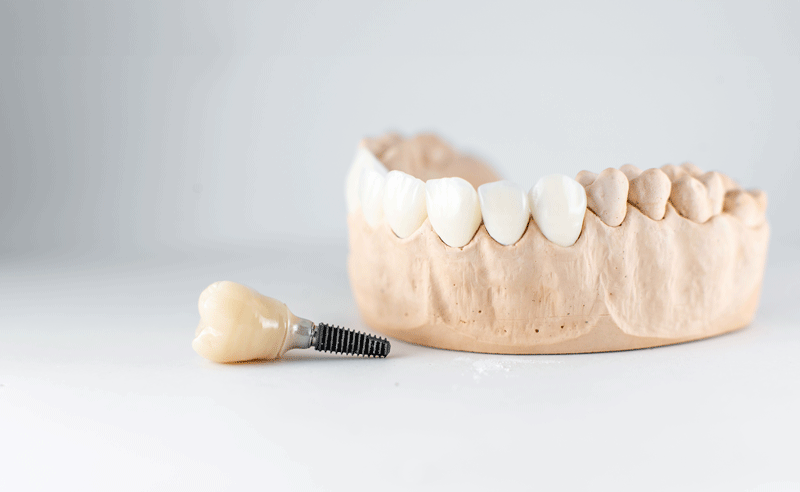
Dental implants have a documented success rate of 95 to 98%, making them one of the most predictable procedures in restorative dentistry. But like any surgical procedure, implant placement carries potential side effects and risks that patients should understand before moving forward. Knowing what is normal, what to watch for, and how a skilled provider minimizes complications helps patients approach treatment with realistic expectations and appropriate confidence.
At Charlotte Dental Arts, dental implants in Charlotte, NC are placed and restored entirely in-house by Dr. Edwin Porter, a Diplomate of the International Congress of Oral Implantologists (DICOI). The DICOI credential requires a minimum of 120 documented implant cases and 250 continuing education hours, reflecting a level of surgical experience that directly reduces the likelihood of complications.
Normal Post-Surgical Side Effects
The following side effects are expected following implant surgery and are not cause for concern. They typically resolve within a few days to two weeks with proper aftercare:
- Swelling: Soft tissue swelling around the implant site and sometimes extending to the cheek is common. It typically peaks at 48 to 72 hours post-surgery and then gradually subsides. Applying an ice pack to the outside of the face in 20-minute intervals during the first 24 hours helps minimize swelling.
- Discomfort: Mild to moderate soreness at the surgical site is normal for the first several days. Most patients manage this effectively with over-the-counter pain medication such as ibuprofen or acetaminophen. Dr. Porter prescribes stronger medication for more complex cases when needed.
- Minor bleeding: A small amount of bleeding or blood-tinged saliva for the first 24 hours is normal. Biting down gently on gauze and avoiding vigorous rinsing helps the clot form properly.
- Bruising: Some patients experience bruising of the skin and gum tissue near the surgical site. This is harmless and typically resolves within one to two weeks.
Most patients feel well enough to return to light work the day after surgery. Sedation options at Charlotte Dental Arts, including nitrous oxide, oral sedation, and IV sedation, ensure that the surgical experience itself is comfortable and anxiety-free.
Potential Complications to Be Aware Of
While serious complications are uncommon, patients should be aware of the following and contact Charlotte Dental Arts promptly if they occur:
Infection
Infection is the most common implant complication and typically presents as increasing redness, swelling, or discharge around the implant site after the first few post-surgical days, rather than the normal initial swelling that improves over time. Most infections respond well to antibiotics when caught early. Smoking, poor oral hygiene, and uncontrolled diabetes are the primary risk factors for post-surgical infection. Patients are given specific aftercare instructions to minimize this risk.
Peri-Implantitis
Peri-implantitis is a form of gum disease that affects the tissue and bone surrounding an implant rather than a natural tooth. It typically develops due to poor oral hygiene, allowing bacterial biofilm to accumulate around the implant, and requires prompt treatment to prevent bone loss. Regular professional cleanings and consistent home care are the most effective prevention. Charlotte Dental Arts recommends professional cleanings every three to six months for implant patients to allow early detection of any tissue changes.
Implant Failure
Implant failure — where the implant does not fully integrate with the jawbone or becomes loose after integration — is uncommon but possible. Early failure is typically related to poor bone quality, infection, or excessive load on the implant before osseointegration is complete. Late failure is most commonly associated with chronic peri-implantitis or trauma. The 3D CBCT imaging used at Charlotte Dental Arts during treatment planning identifies bone quality and density before surgery, allowing precise placement and minimizing the risk of early failure.
Nerve Sensitivity
In rare cases, implants placed in the lower jaw can be positioned too close to the inferior alveolar nerve, resulting in temporary or, very rarely, permanent numbness or tingling in the lip, chin, or tongue. Three-dimensional surgical planning with CBCT imaging is the primary safeguard against this complication, as it allows Dr. Porter to visualize the exact location of nerve pathways before placing any implant.
Sinus Complications
Upper jaw implants placed near the sinus floor can in some cases protrude into the sinus cavity, causing sinusitis-like symptoms. This is addressed during planning by evaluating available bone height above the sinus. When bone height is insufficient, a sinus lift procedure builds the necessary foundation before implant placement.
How Charlotte Dental Arts Minimizes Risk
The most effective risk reduction comes from thorough pre-surgical planning, experienced placement, and proper aftercare. At Charlotte Dental Arts, every implant case begins with a CBCT 3D scan that maps bone volume, density, nerve pathways, and sinus anatomy before a single incision is made. Dr. Porter’s DICOI credential and 25-plus years of implant experience mean his surgical technique reflects the kind of proficiency that comes from performing procedures at volume over many years.
Post-surgical aftercare instructions are reviewed in detail with every patient, and the Charlotte Dental Arts team is accessible for any questions or concerns during the healing period.
Start With a Free Consultation
Understanding the risks of dental implants is part of making an informed decision. Dr. Edwin Porter discusses candidacy, risks, and the full treatment process at your free consultation, so you leave with complete clarity before committing to anything. Charlotte Dental Arts offers financing through CareCredit, Cherry, and Proceed Finance. Schedule your consultation today.