

When a tooth is lost, the question of what comes next often leads patients to explore dental implants as a long-term solution. Dental implants are widely regarded as one of the most durable tooth replacement options available, and for good reason. With proper care, the implant post can last decades, and in many cases, a lifetime. The crown attached to the implant may eventually need replacement due to normal wear, but the titanium root itself is built to go the distance.
At Charlotte Dental Arts, we specialize in implant dentistry and understand that patients want more than just a quick answer. They want to know what affects longevity, how to protect their investment, and whether implants are the right choice for their situation. Our team, led by Dr. Edwin Porter, a Fellow in the Academy of General Dentistry and a Diplomat in the International Congress of Oral Implantologists, brings over 20 years of experience and a depth of implant knowledge that gives our patients real confidence in their care.
What the Research Says
The evidence behind dental implant longevity is compelling. A long-term cohort study published in Clinical Implant Dentistry and Related Research tracked more than 10,000 dental implants over 22 years and found high survival rates with consistent maintenance. Studies like this confirm that implants are not just a short-term fix but a reliable, decades-long solution for most patients.
That said, the implant itself is only part of the picture. The crown that sits on top of the post is subject to everyday biting and chewing forces, which means it may need to be replaced at some point, typically after 10 to 15 years. Think of it similarly to how a car engine can outlast its tires; the core structure holds, but the components that take direct wear need occasional attention.
Factors That Influence Implant Longevity
Several variables determine whether an implant lasts 15 years or a lifetime. Understanding these factors can help patients make better decisions and take a more active role in protecting their results.
Oral hygiene is the single most controllable factor. Implants cannot develop cavities, but the gum and bone tissue around them can still be affected by bacterial buildup. Peri-implantitis, an inflammatory condition similar to gum disease, is one of the most common reasons implants fail. Patients who brush twice daily, floss consistently, and attend regular dental cleanings and exams significantly reduce this risk.
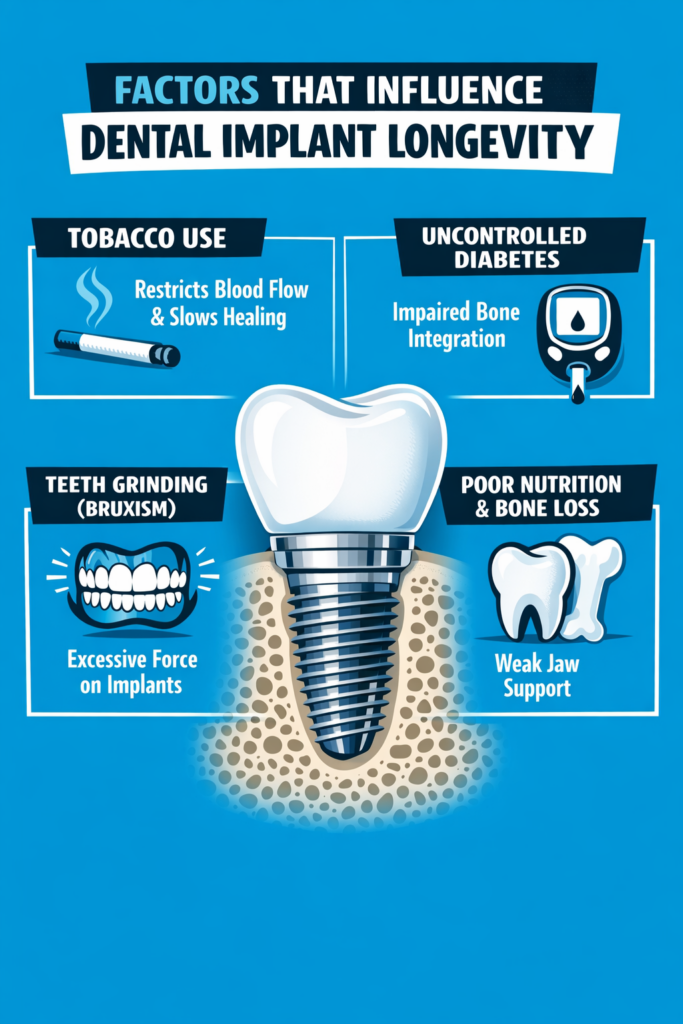
The following habits and health conditions also play a meaningful role in how long implants last:
- Tobacco use, which restricts blood flow and slows healing around the implant site
- Uncontrolled diabetes, which can impair osseointegration (the process of bone fusing to the implant)
- Teeth grinding (bruxism), which places excessive force on the crown and can loosen the implant over time
- Poor nutrition or bone density issues that affect how well the jaw supports the implant
Patients with any of these concerns are not automatically disqualified from implants, but these factors should be addressed and managed before and after placement. A customized treatment plan makes a significant difference. We also offer sedation dentistry for patients who feel anxious about the procedure, helping ensure a comfortable experience from start to finish.
How to Maximize Your Implant’s Lifespan
Getting a dental implant is an investment, and protecting that investment comes down to consistent habits. The osseointegration process, where the jawbone grows around and fuses with the titanium post, takes several months after placement. During this healing period, following post-procedure instructions is especially important.
Once healed, the routine maintenance for implants is not dramatically different from caring for natural teeth. Brushing with a soft-bristle toothbrush, using floss or an interdental brush around the implant site, and avoiding chewing on ice or hard objects all help preserve the crown and the implant beneath it. For patients who grind their teeth at night, a custom night guard can prevent unnecessary stress on the implant. Patients dealing with missing or failing teeth often find that taking action sooner rather than later leads to better long-term outcomes, as bone loss can accelerate when a tooth is absent.
Partner With Charlotte Dental Arts for Long-Lasting Results
Dental implants placed with precision and supported by expert care have every reason to last a lifetime. At Charlotte Dental Arts, Dr. Edwin Porter and Dr. Robert Lowe have completed thousands of CEREC same-day restoration cases and bring rigorous continuing education to every procedure, with more than 100 hours of CE annually and training through the Dawson Academy and Pankey Institute. Our patients benefit not only from clinical expertise but also from a practice that has been recognized as a Top Dentist in Charlotte Magazine for over 20 years.
We welcome patients with any dental insurance plan and are happy to help you maximize all of your available benefits. We also offer several flexible financing options, including CareCredit, Cherry Financing, and our Premier Dental Savings Program, so cost is never a barrier to getting the care you need. Whether you are just beginning to explore implants or are ready to move forward, Dr. Edwin Porter and our team are here to walk you through every step. Contact our office today to schedule your consultation.